Almost every content team now uses AI somewhere in its workflow. The question is no longer "can we use AI?" but "how do we use it without creating the kind of content Google's systems are built to demote?" Google's guidance answers that clearly, and the October 2026 update made it even more explicit.
What did Google change in its AI content guidance on October 1, 2026?
Google's Search documentation changelog lists an update to its guidance on using generative AI content on October 1, 2026. According to the changelog, the guide was updated with information from the Search Quality Rater Guidelines, to align the documentation with what Google presents at its developer events.
The main points of the updated guide:
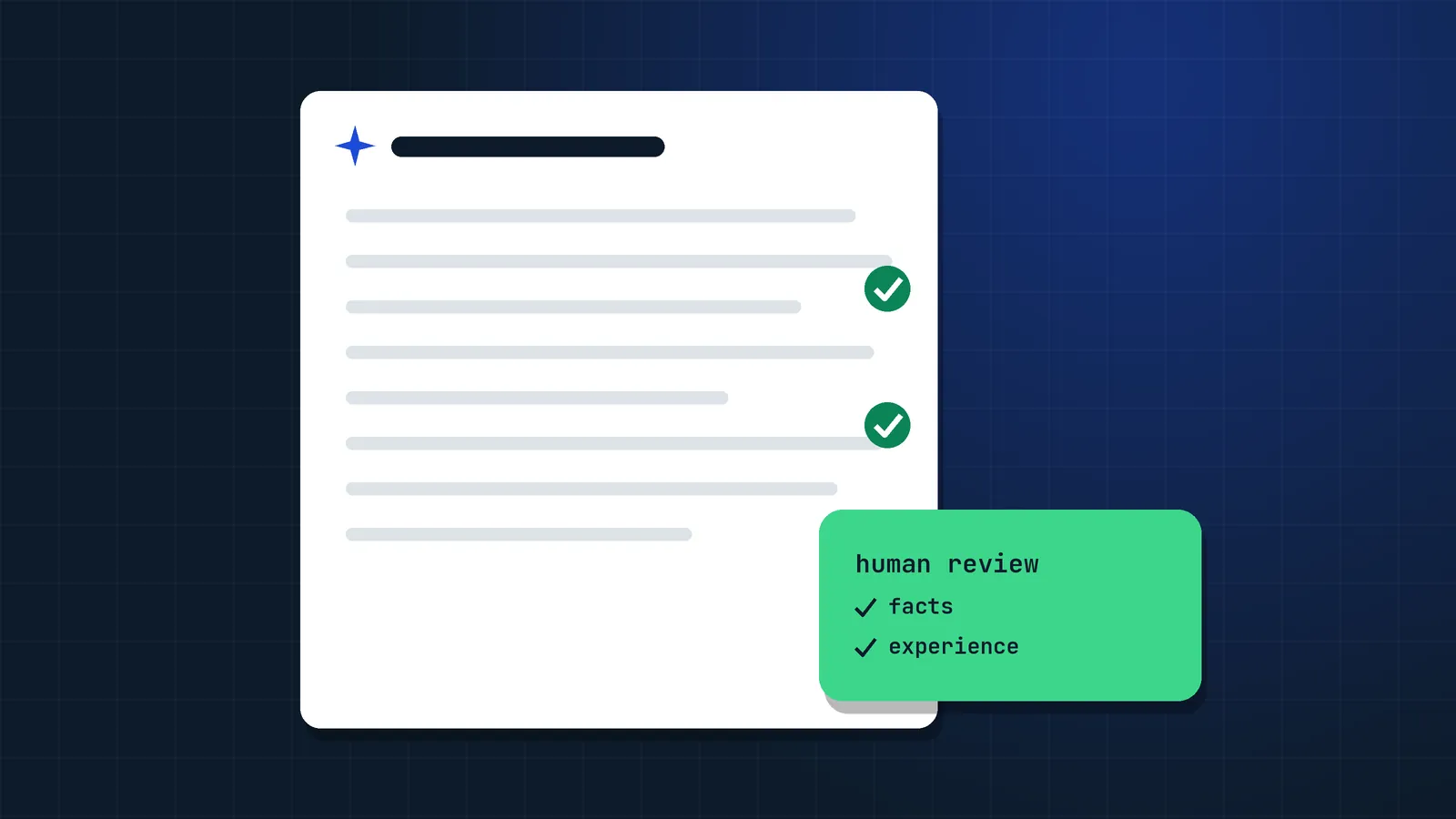
- Human review is critical. The guide explains that generative models predict likely sequences of words based on their training data, so output can contain hallucinations. Google says it is critical to manually fact-check and review all AI-generated content for accuracy and trustworthiness before publishing.
- Review metadata too, not just body copy. The guide says this review also applies to title elements, meta descriptions, structured data and image alt text, which can appear in Search results.
- No ban. AI-assisted content is acceptable when it is reviewed, accurate and helpful.
This is consistent with Google's long-standing position: it rewards quality content however it is produced, and it acts against content made primarily to manipulate rankings. Microsoft takes the same line: the Bing Webmaster Guidelines say large-scale content generated without oversight, quality control or editorial review "may be excluded from indexing", which also removes it from Copilot answers.
What is scaled content abuse?
Google's spam policies define scaled content abuse as generating many pages primarily to manipulate search rankings rather than to help users. Typical examples:
- Thousands of templated location or "best X in Y" pages with swapped keywords and no unique value.
- Mass AI-generated articles published with little or no human review.
- Scraped or spun content combined into new pages.
- Stitching content from multiple sources without adding value.
The key word is primarily. A product catalogue with 10,000 well-built product pages is not scaled abuse. Ten thousand thin pages created only to catch long-tail searches can be, regardless of whether a person or a model wrote them.
Where does AI help in content production, and where does it hurt?
Use AI for speed and people for judgement. AI is good at research, drafts and structure; facts, expertise and final claims need a person who signs off on them.
| Use AI for | Keep humans in charge of |
|---|---|
| Research summaries and SERP analysis | Deciding what is true and current |
| Outlines and first drafts | Expertise, opinions and recommendations |
| Clustering keywords and mapping intent | Original data, testing and examples |
| Rewriting for clarity or different reading levels | Brand voice and final edit |
| Generating schema, regex, scripts | Legal, medical, financial and gambling claims |
| Translation drafts | Local accuracy and compliance |
What does a safe AI content workflow look like?
1. Start from a real brief
Define the reader, the search intent, the questions the page must answer, and what this page will add that competitors do not have. If you cannot answer that last point, do not publish the page.
2. Gather the unique inputs first
Before any drafting, collect the material only you have: product data, customer questions, internal benchmarks, screenshots, expert interviews, case results. AI is good at shaping material and bad at inventing experience.
3. Draft with AI, edit as an expert
Use AI to produce a structured draft from your brief and inputs. Then the subject expert edits: removing generic filler, correcting facts, adding examples, adding a point of view.
4. Fact-check everything that could be wrong
Check every number, date, name, quote, price, legal or regulatory statement, and every link. Hallucinated statistics and fake sources are the fastest way to lose trust with readers and quality systems alike.
5. Review the metadata
Google's updated guidance explicitly covers titles, meta descriptions, structured data and alt text. Make sure they are accurate, match the visible content and are not keyword-stuffed.
6. Show who is responsible
Publish under a real author with a bio and relevant experience. Google's helpful content guidance asks who created the content, how and why. Add a "last reviewed" date when facts are time-sensitive. Accountability is one of the clearest ways to show content is not mass-produced.
7. Publish at a pace you can maintain quality
Ten excellent pages beat five hundred mediocre ones. If your editorial capacity is one expert reviewer, your publishing volume should match what that person can genuinely review.
How can you tell if your AI content is at risk?
The clearest warning signs are pages that look alike, readers who leave quickly and pages Google crawls but does not index. Watch for these:
- Many pages with near-identical structure and phrasing.
- Low engagement: short visits, quick returns to search.
- Indexing problems: large numbers of pages "Crawled, currently not indexed". A technical SEO audit shows which templates are affected.
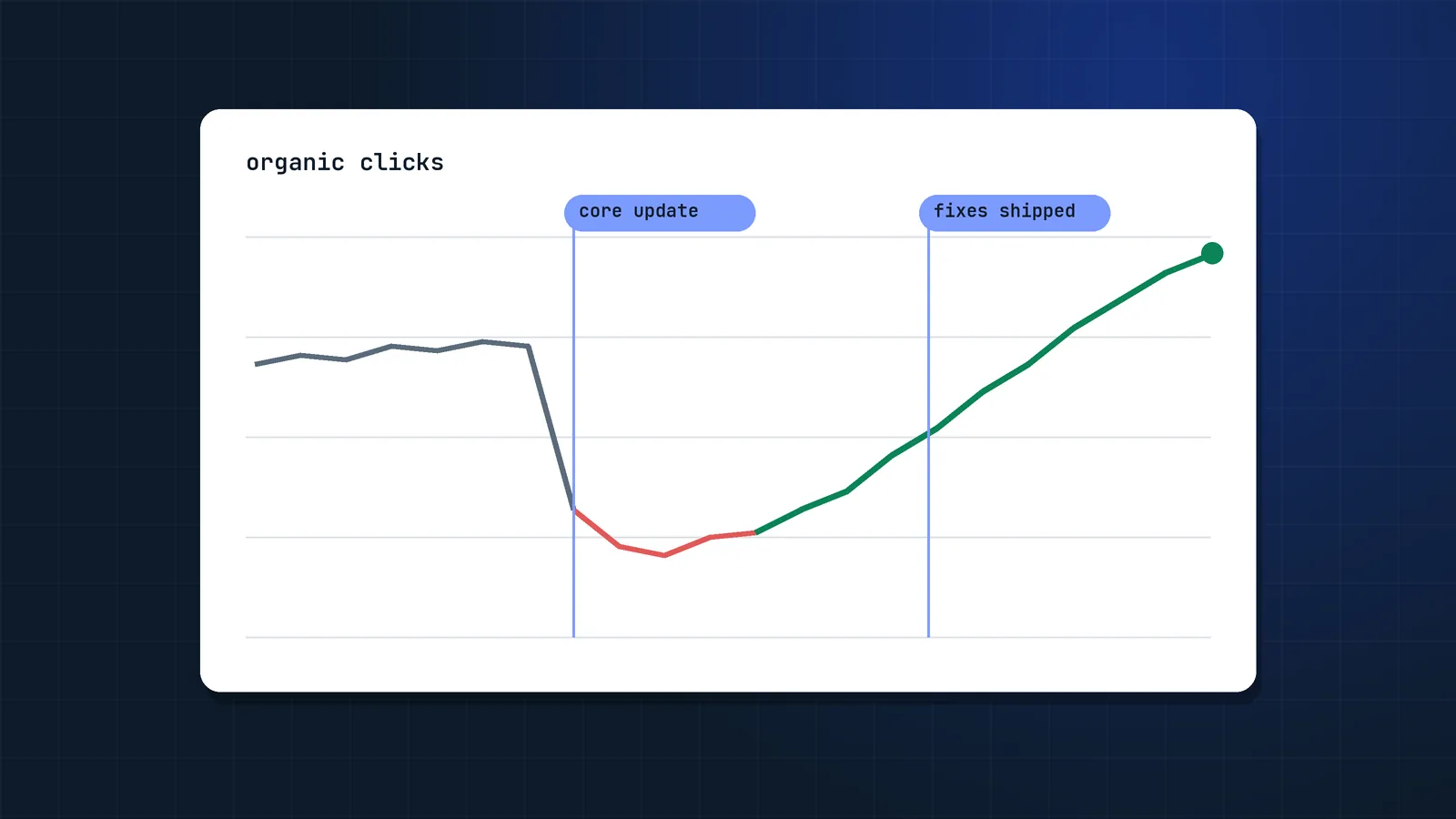
- Traffic losses concentrated in AI-produced sections after a core or spam update (see core update recovery).
- Factual errors pointed out by users, or content that contradicts itself across pages.
Does AI-written content get cited in AI search?
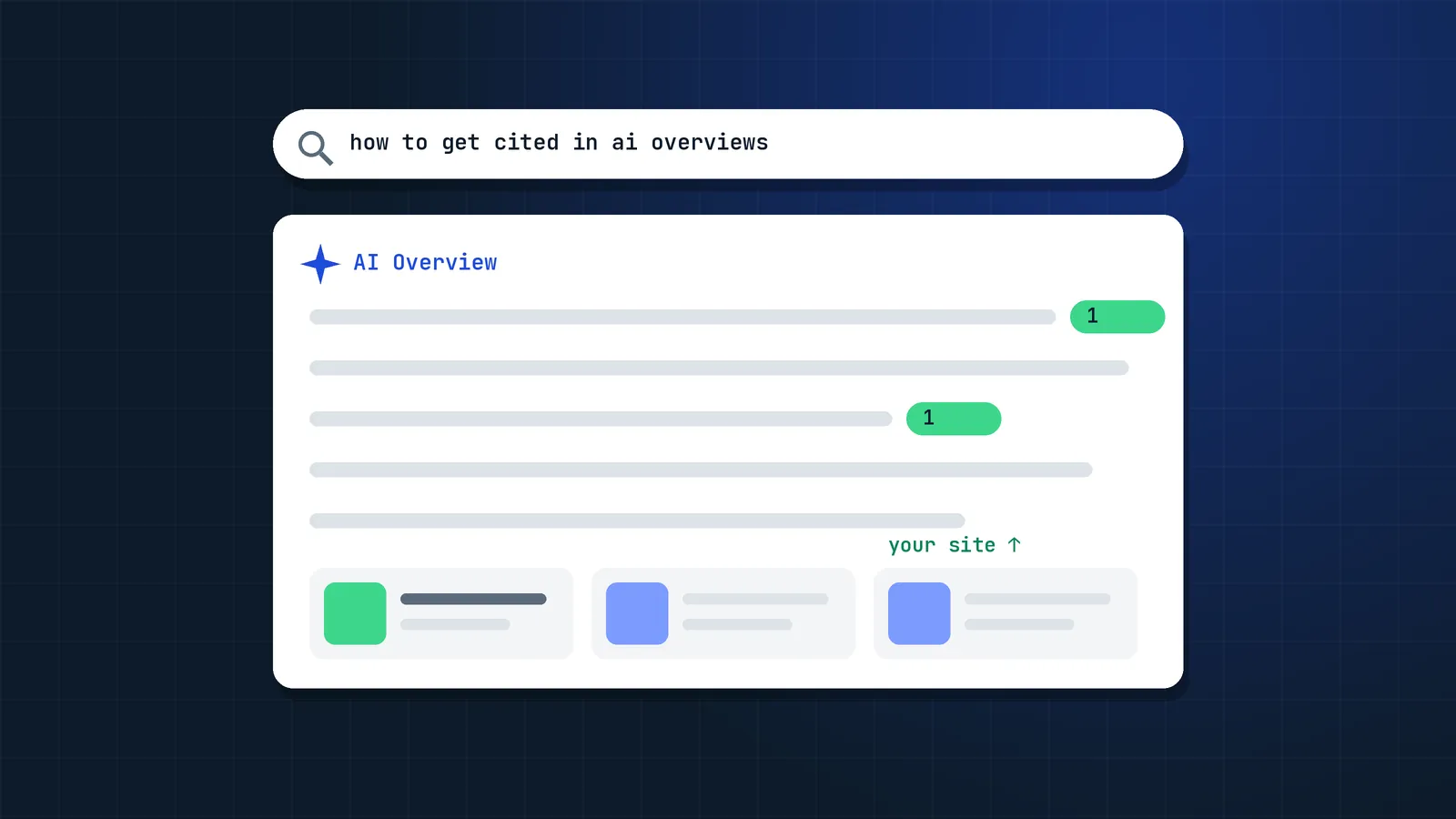
Content written to be quoted by AI assistants follows the same rules. Clear, accurate passages with original information are what get cited in AI Overviews and ChatGPT. Generic AI text that repeats the consensus gives an assistant no reason to cite you over anyone else. See how to get cited in AI Overviews and AI Mode.
FAQ
Does Google penalise AI-generated content?
No, not because it is AI-generated. Google evaluates content quality and helpfulness regardless of how it is produced. AI content that is reviewed, accurate and valuable can rank; mass-produced content made mainly to manipulate rankings violates spam policies.
What did Google change about AI content in October 2026?
On October 1, 2026 Google updated its generative AI content guidance with material from its Search Quality Rater Guidelines. The update stresses human review and fact-checking before publishing, including titles, meta descriptions, structured data and alt text.
Do I need to label content as AI-generated?
Google does not require a general AI label for Search, but it encourages transparency about how content is created where readers would reasonably expect it. Some industries and regions have their own disclosure rules, so check those separately.
How much AI content is too much?
There is no percentage threshold. The risk comes from publishing content without real value or review at scale. If every page has a clear purpose, expert input and fact-checking, the share of AI in the drafting process is not the issue.
Can AI-written content get cited in AI Overviews?
Yes, if it is accurate, clear and adds something useful. AI systems prefer passages with specific, verifiable information. Generic text that repeats what every other page says is less likely to be chosen.
Does Bing treat AI content differently from Google?
Not in principle. Bing's Webmaster Guidelines say automatically generated content at scale without oversight or editorial review may be excluded from indexing, and that content should be created for users. Reviewed, accurate and useful AI-assisted content is fine on both.
Should AI-assisted content have a named author?
Yes, where readers would expect one. A named author with real experience shows who is responsible for the content, which Google's helpful content guidance encourages, and it is a clear signal that pages are reviewed rather than mass-produced.
Sources
- Google Search's guidance on generative AI content on your website, Google Search Central
- Latest Google Search documentation updates, Google Search Central
- Google tells sites to fact-check AI content before publishing, Search Engine Journal
- Google tightens its approach to AI content, Delante
- Spam policies for Google web search, Google Search Central
- Bing Webmaster Guidelines, Microsoft Bing
- Creating helpful, reliable, people-first content, Google Search Central