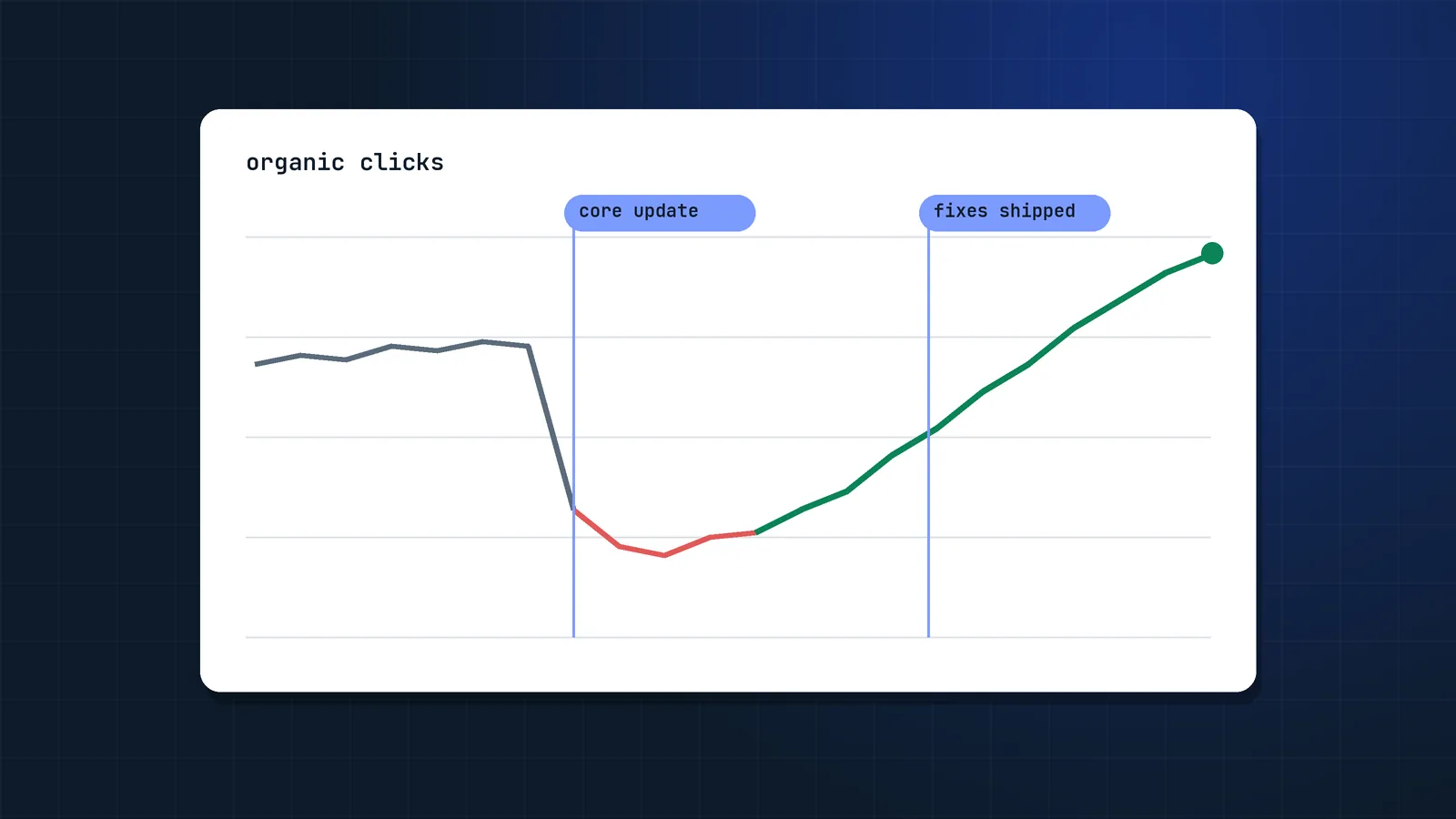
A traffic graph that falls off a cliff the week of a Google update is one of the most stressful things in a marketer's job. I have helped sites recover from these drops, including a US online retailer that had lost rankings to out-of-stock pages. Eleven months later it had 621% more leads and 456% more revenue. The process is calm and methodical, and it starts with understanding what actually happened.
Which Google updates rolled out in 2026?
| Update | Dates | Notes |
|---|---|---|
| March 2026 core update | March 27 to April 8 | First broad core update of the year, about 12 days |
| May 2026 core update | May 21 to June 2 | Second core update, about 12 days |
| March 2026 spam update | March 24 to 25 | Under a day, just before the core update |
| June 2026 spam update | June 24 to 26 | About 2 days |
| August 2026 spam update | August 18 to 21 | About 3 days |
| September 2026 spam update | September 24 to October 8 | About 14 days, the longest spam update of 2026 |
Dates are from the Google Search Status Dashboard.
As of October 30, 2026, Google has not confirmed a new ranking update since the September spam update. Forum chatter and tracking tools often report volatility, but only the Google Search Status Dashboard confirms an update, so check it before drawing conclusions.
What is the difference between a core update and a spam update?
- Core updates are broad changes to how Google assesses relevance and quality across all sites. Google's core updates documentation says they are designed to deliver "helpful and reliable results for searchers" and do not target specific sites. If you drop, it usually means other pages were judged more helpful, not that you broke a rule.
- Spam updates improve systems that detect violations of Google's spam policies, such as scaled content abuse, site reputation abuse, expired domain abuse, cloaking or link spam. Google did not publish specific targets for the September 2026 spam update.
- Manual actions are separate: a human reviewer applies them and you will see them in Search Console under Security & Manual Actions.
If your drop started inside a spam update window and affects the whole site sharply, look at policy risks first. If it is gradual, uneven and concentrated in certain page types during a core update, it is a quality and relevance re-assessment.
Step 1: Confirm it is really the update
Before blaming Google, rule out the things that look the same in a graph. Google's own guide to debugging traffic drops lists the same causes:
- Tracking problems: consent banner changes, GA4 tag removed, filters.
- Technical issues: robots.txt changes, accidental
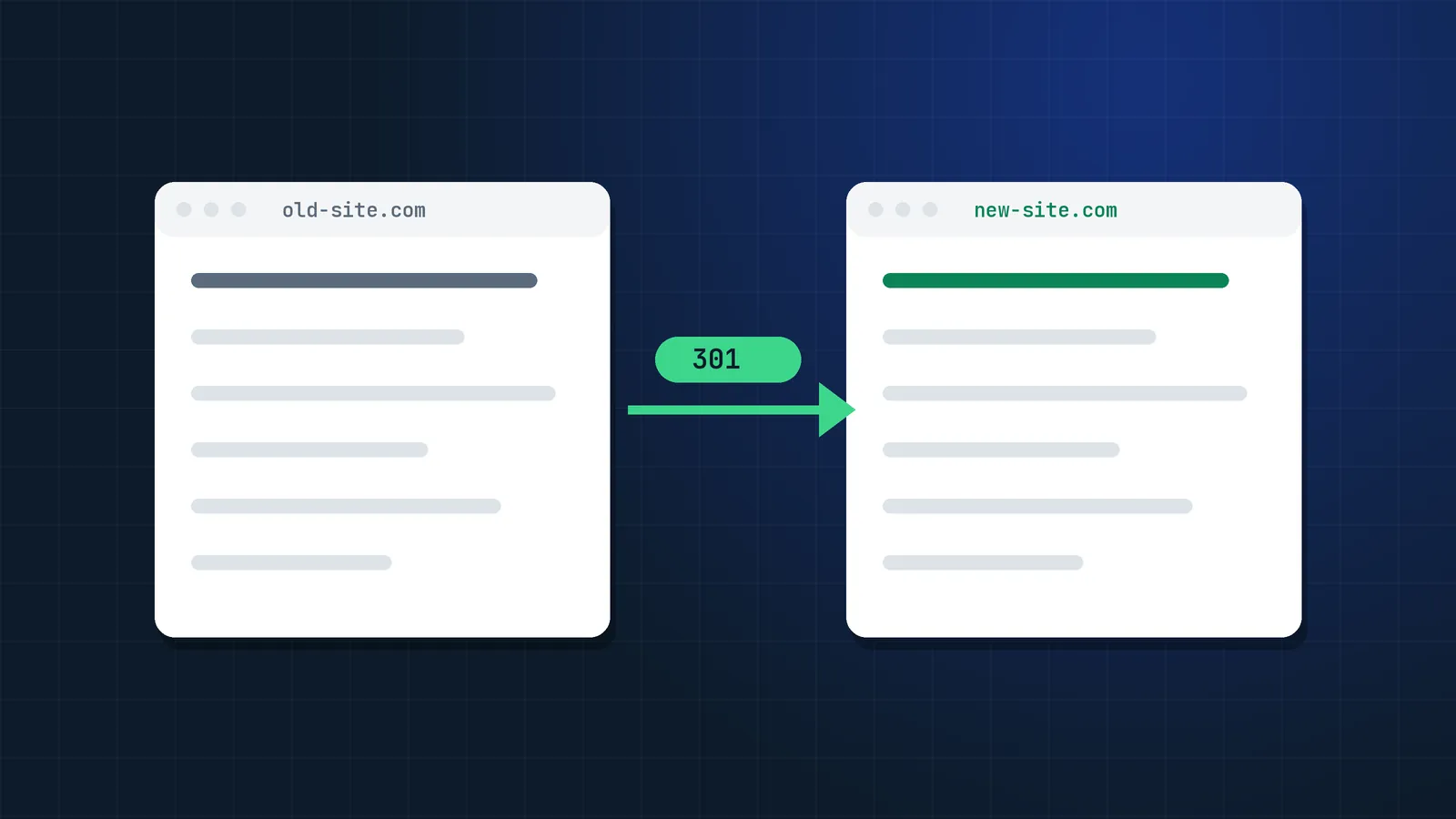
noindex, broken canonicals, server errors, slow responses. Check the Pages report and Crawl Stats in Search Console. - Site changes: a redesign, migration, CMS update or URL change. See the site migration checklist.
- Seasonality: compare year over year, not just week over week.
- SERP changes: a new AI Overview, more ads or a product carousel can reduce clicks while your ranking stays the same. Check impressions and position, not only clicks.
Step 2: Measure the drop properly
Wait at least a full week after the update completes, as Google recommends, then:
- Compare the same number of days before and after the update in Search Console.
- Use the Pages tab to find which URLs lost the most clicks and impressions.
- Use the Queries tab to see whether you lost head terms, long-tail or branded queries.
- Segment by directory or page type (blog, category, product, location pages).
- Segment by country and device.
You are looking for a pattern. "All product-review articles lost 60% while category pages held" is actionable. "Traffic is down" is not.
Step 3: Compare yourself with the winners
For your top 20 lost queries, look at who now ranks above you and ask honestly:
- Do they answer the query faster and more completely?
- Do they show real experience: original photos, testing, data, named experts?
- Is their page easier to use on mobile, with fewer ads and interruptions?
- Are they a more trusted brand for this topic?
- Does the search intent seem to have shifted (for example, from guides to product pages or forums)?
Write the gaps down per page type. This becomes your recovery backlog.
Step 4: Fix what matters, in this order
1. Content that does not deserve to rank
- Improve pages that have potential: add first-hand experience, clearer answers, up-to-date facts and better structure.
- Merge overlapping pages competing for the same intent and redirect the weaker ones.
- Remove or noindex pages with no search value and no realistic fix (thin tag pages, auto-generated stubs, outdated news with no traffic).
Do this page by page, not with a bulk delete. Pruning large sections without analysis is one of the most common ways to make a drop worse.
2. Trust and transparency
- Clear authorship with bios and credentials on content where expertise matters. Google's helpful content guidance asks exactly "who, how and why" for each page.
- An honest About page, contact details and editorial policy.
- Sources for factual claims.
- For YMYL topics (finance, health, gambling, legal), stricter review and expert involvement.
3. Page experience
- Reduce intrusive ads and pop-ups, especially above the fold on mobile.
- Fix Core Web Vitals problems on key templates (LCP, INP, CLS).
- Make the main content visible immediately.
4. Policy risks (if a spam update hit you)
- Scaled content: large numbers of templated or AI-generated pages with little value. See how to use AI content without getting hit.
- Site reputation abuse: third-party content hosted to exploit your domain's ranking signals.
- Expired domain abuse and link schemes: paid links, private blog networks.
Step 5: Be patient and keep shipping
Google has said that sites may see some recovery between core updates as systems refresh, but the largest changes typically appear when the next core update rolls out. Keep improving continuously, log every change with a date, and judge results at the next update.
What not to do: change titles on every page weekly, disavow links in panic, block Googlebot from "weak" sections, or rewrite the whole site with AI. Each of these can turn a recoverable drop into a long-term decline.
What does a 30-60-90 day recovery plan look like?
Days 1 to 30: confirm the cause, segment the drop, audit the top 50 losing URLs against the winners, fix technical issues.
Days 31 to 60: improve or merge the highest-value losing pages, add authorship and sources, clean up thin and duplicate content, fix template-level UX problems.
Days 61 to 90: expand content with original data and expertise, build mentions and links from relevant sites, monitor the next update window.
FAQ
How long does it take to recover from a Google core update?
Most sites see meaningful recovery only after the next core update, which in 2026 has meant a gap of a few months. Smaller improvements can appear between updates as Google's systems refresh, but there is no fixed timeline.
Was my site penalised by the core update?
Usually not. Core updates re-assess how helpful and relevant pages are compared with others; they are not penalties. A manual action would appear in Search Console, and spam updates target policy violations specifically.
Should I delete content that lost traffic?
Not automatically. First decide whether each page can be improved, merged into a stronger page, or has no value. Delete or noindex only pages with no realistic purpose, and redirect merged pages to the best equivalent.
Did the September 2026 spam update target link spam?
Google has not published specific targets for the September 2026 spam update. According to the Search Status Dashboard it ran from September 24 and finished on October 8. If you were hit, review all of Google's spam policies, not only links.
When is the next Google core update?
Google has not announced one as of October 30, 2026. Google does not pre-announce core updates on a fixed schedule, so keep an eye on the Google Search Status Dashboard.
How do I know if a core update hit my site?
Compare Search Console clicks and impressions for the same number of days before and after the update dates on the Google Search Status Dashboard. If the drop starts inside the rollout window, concentrates on certain page types and no technical or tracking change explains it, the update is the likely cause.
Can AI Overviews cause a drop that looks like a core update?
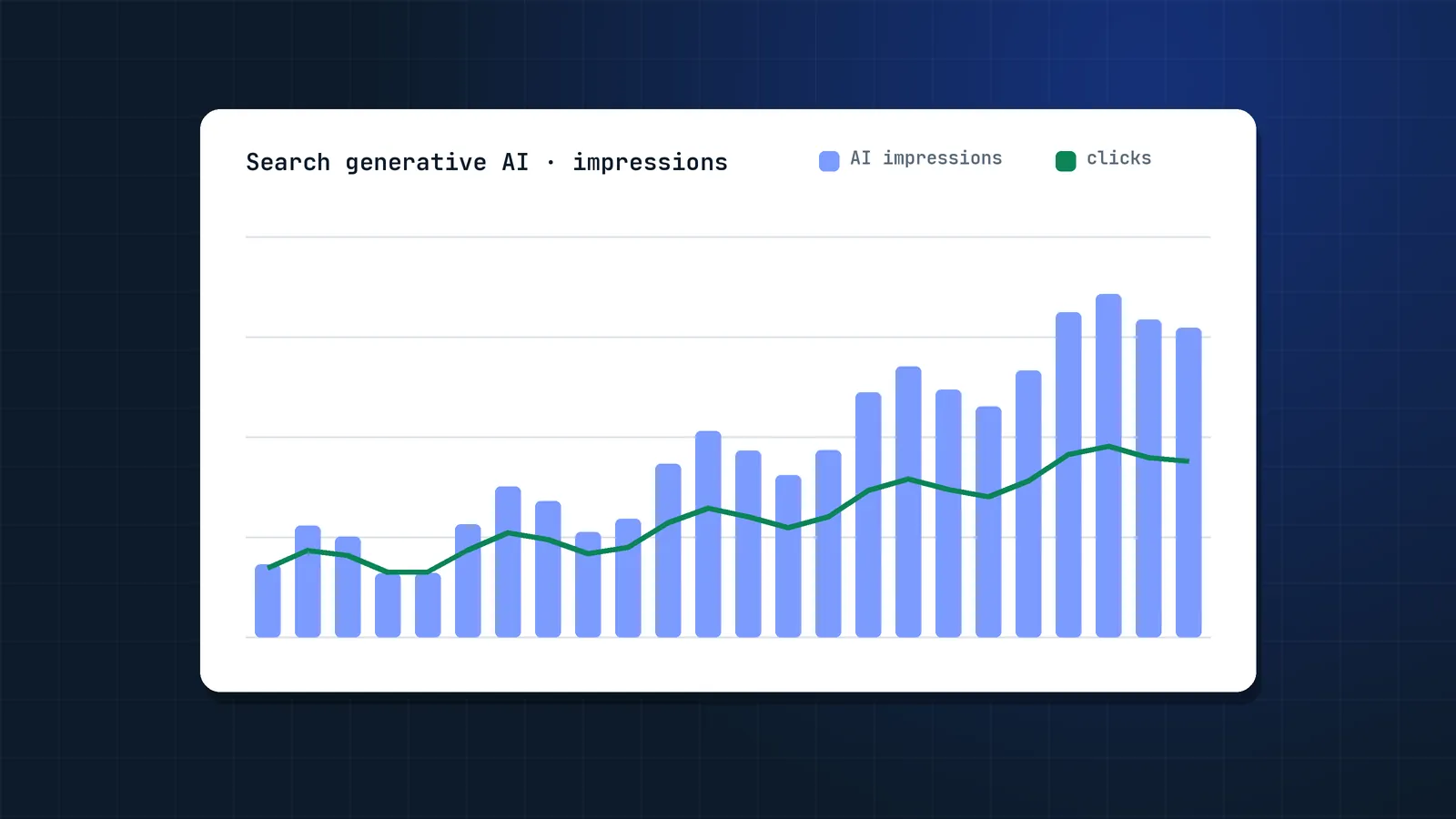
Yes. If an AI Overview starts appearing for your queries, clicks can fall while your rankings and impressions stay stable. Check position and impressions as well as clicks, and look at the Generative AI report in Search Console, before treating it as a core update loss.
Sources
- Ranking incident history, Google Search Status Dashboard
- Google Search's core updates, Google Search Central
- Spam policies for Google web search, Google Search Central
- Google confirms March 2026 core update is complete, Search Engine Journal
- Google begins rolling out the May 2026 core update, Search Engine Journal
- Google September 2026 spam update is done rolling out, Search Engine Roundtable
- Google September 2026 spam update, Search Engine Journal
- Is a Google October 2026 update rolling out?, Search Engine Watch
- Debugging drops in Google Search traffic, Google Search Central
- Creating helpful, reliable, people-first content, Google Search Central
- Web Vitals, web.dev (Google)