"How much does a technical SEO audit cost?" is one of the first questions I get on intro calls, and the honest answer is a range: from a few hundred dollars to well over $15,000. That range is not random. It follows the size of your site, how it is built and what you need the audit to answer.
This guide breaks down 2026 prices from published surveys, explains what drives the cost up or down, and shows what you should get for your money so you can compare quotes properly. If you already know you need one, here is how I run a technical SEO audit.
How much does a technical SEO audit cost in 2026?
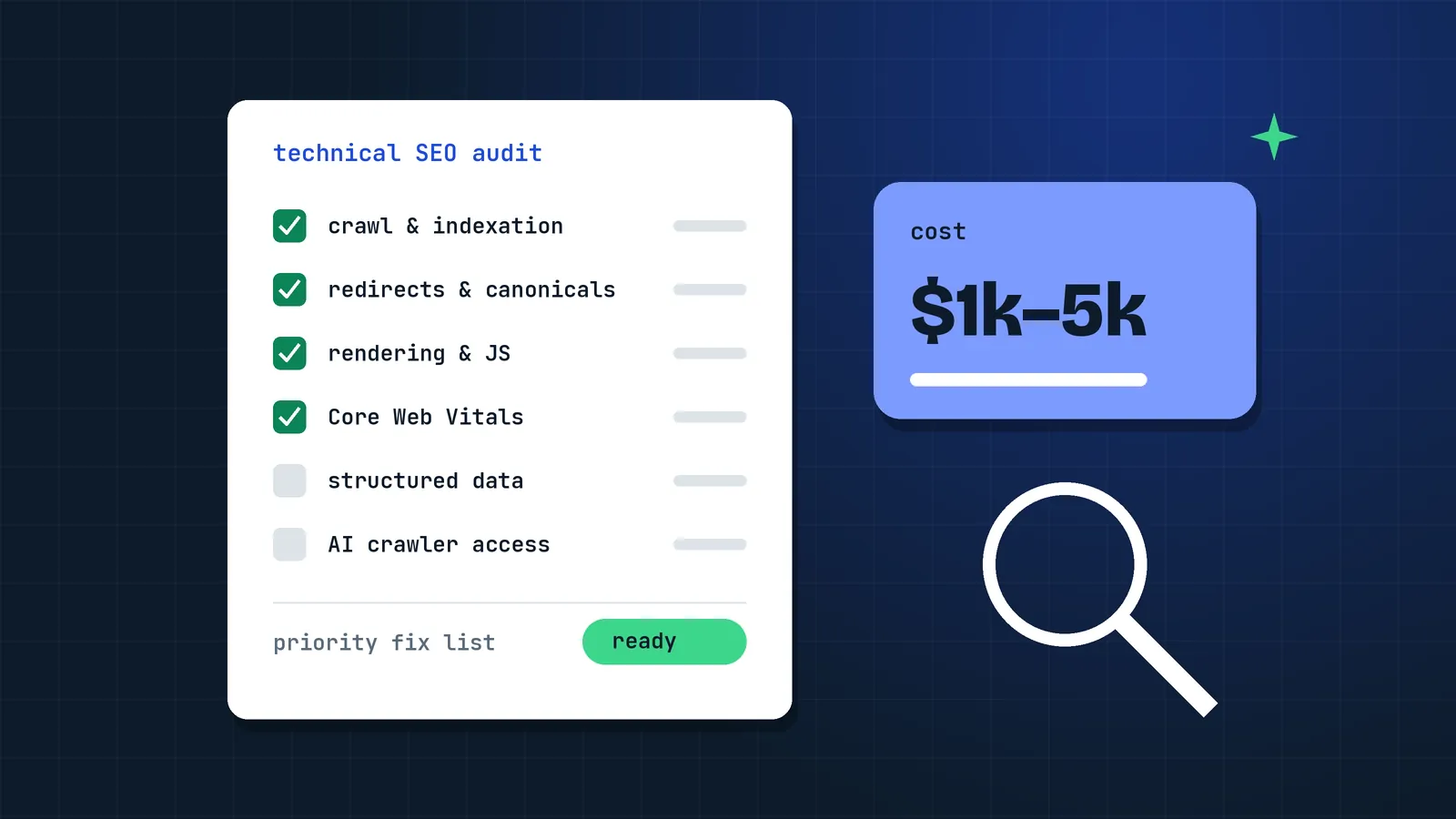
For most businesses, a professional technical SEO audit costs between $1,000 and $5,000. Small sites can get a solid audit for less; large, complex sites regularly pay $10,000 or more.
| Site type | Typical size | Typical price range | Time to deliver |
|---|---|---|---|
| Small business or brochure site | Up to ~500 URLs | $500 to $1,500 | 3 to 7 days |
| Small e-commerce store, SaaS or content site | ~500 to 10,000 URLs | $1,500 to $5,000 | 1 to 3 weeks |
| Mid-size e-commerce, multi-location or multilingual site | ~10,000 to 100,000 URLs | $4,000 to $10,000 | 2 to 4 weeks |
| Large e-commerce, marketplace, publisher or enterprise | 100,000+ URLs | $10,000 to $20,000+ | 4 to 8 weeks |
These ranges are my planning estimates, built from the survey data below and from audits I have scoped for e-commerce, SaaS, marketplace and iGaming sites. Your quote may land outside them, and that is fine as long as you understand why.
What the pricing surveys say
- Ahrefs polled 439 SEO service providers: the average hourly rate is $111, the most common hourly band is $100 to $150 (25% of respondents), and the most popular per-project fee is $2,501 to $5,000 (21.2%).
- Clutch reports that most SEO agencies in its directory charge $100 to $149 per hour.
- WebFX surveyed 250 US businesses: 43% paid between $101 and $750 for an SEO audit. The same company prices its own audit service from $8,600.
That gap between "most businesses paid under $750" and "a full agency audit starts at $8,600" is the key to this whole topic. The two numbers describe different products.
Why do SEO audit prices vary so much?
An audit is mostly expert time. The questions that decide the price are how many hours it takes to understand your site, and how senior the person spending them is.
1. Site size and number of templates
A 50-page site and a 200,000-URL store need very different crawls. What matters most is not the raw URL count but the number of page templates and URL patterns: product, category, filter, blog, location, search results, paginated pages. Each pattern needs its own checks.
2. Technical complexity
These push the price up, because each one needs separate testing:
- JavaScript rendering (React, Vue, Next.js, headless commerce)
- Faceted navigation and URL parameters that create millions of crawlable combinations
- International setups with hreflang, ccTLDs or subfolders
- Server log analysis to see what Googlebot actually crawls
- Recent migrations or platform changes
3. The question you need answered
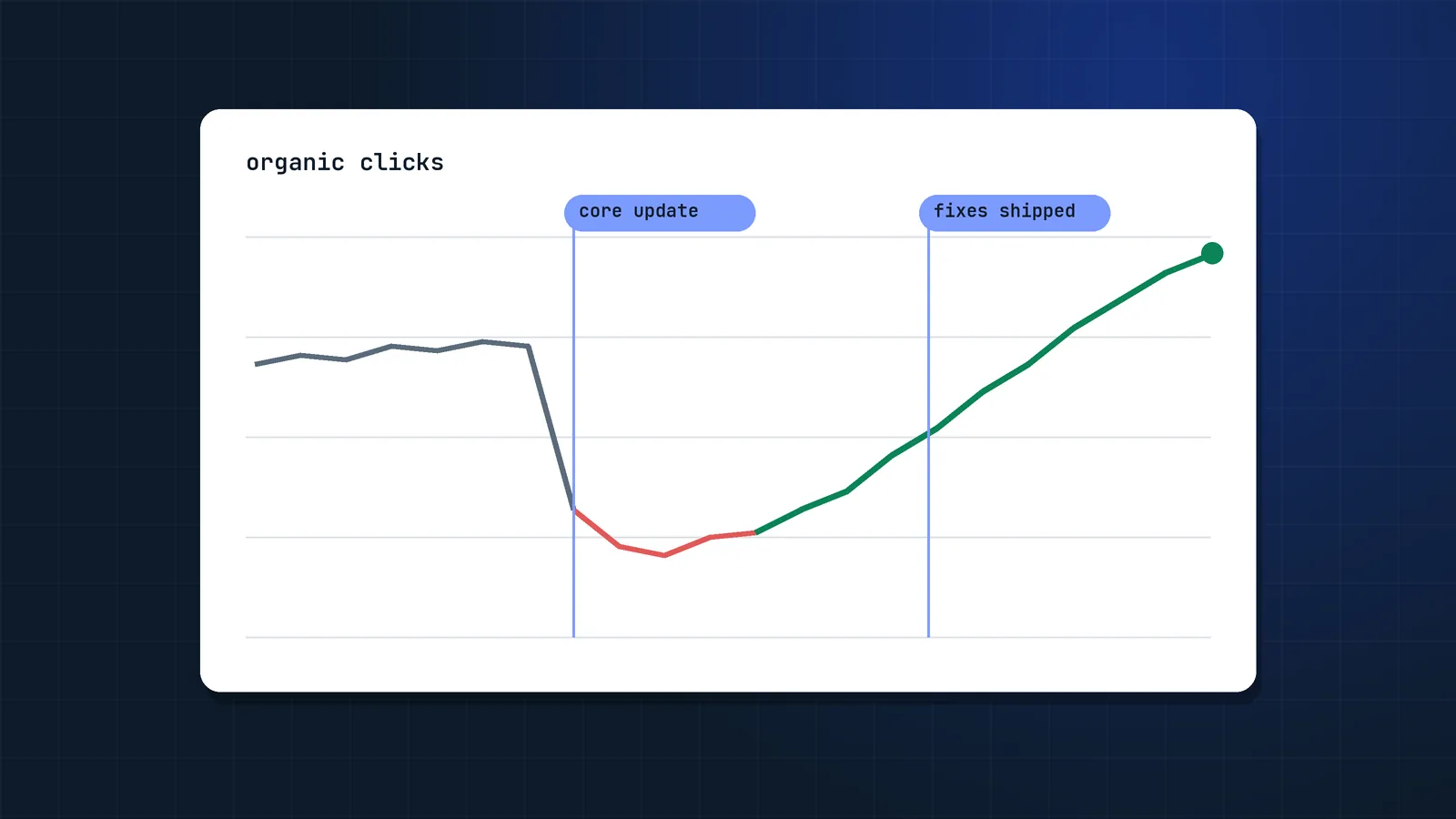
"Give us a health check" is a smaller job than "find out why we lost 40% of organic traffic in May." A traffic-drop audit means matching the drop to site changes, Google updates and specific page types before anyone touches the site. I explain that process in the core update recovery playbook.
4. Who does the work
Freelancers and independent consultants usually charge less than agencies because they carry no account management layer. Agencies add project management, QA and a polished report, which some companies need for internal sign-off. What matters most is the experience of the person who actually reviews your site, whoever sends the invoice.
5. Implementation support
An audit with a review of your developers' fixes, a post-release check and a follow-up crawl costs more than a PDF handover. In my experience it is also the difference between an audit that changes rankings and one that sits in a shared drive.
How much does each type of SEO audit cost?
| Audit type | What you get | Typical cost |
|---|---|---|
| Automated tool report | A crawler or SEO tool export with generic warnings | Free to $300 |
| Basic technical audit | Manual review of key templates, indexation and top issues | $500 to $1,500 |
| Comprehensive technical audit | Full crawl, Search Console and analytics review, prioritized fix list | $1,500 to $5,000 |
| Traffic-drop or recovery audit | Comprehensive audit plus diagnosis of the drop by page type and date | $2,500 to $7,500 |
| Pre-migration audit | Benchmark, redirect mapping, staging checks | $3,000 to $10,000+ |
| Enterprise audit | Large or multi-region sites, log files, JavaScript rendering, stakeholder workshops | $10,000 to $20,000+ |
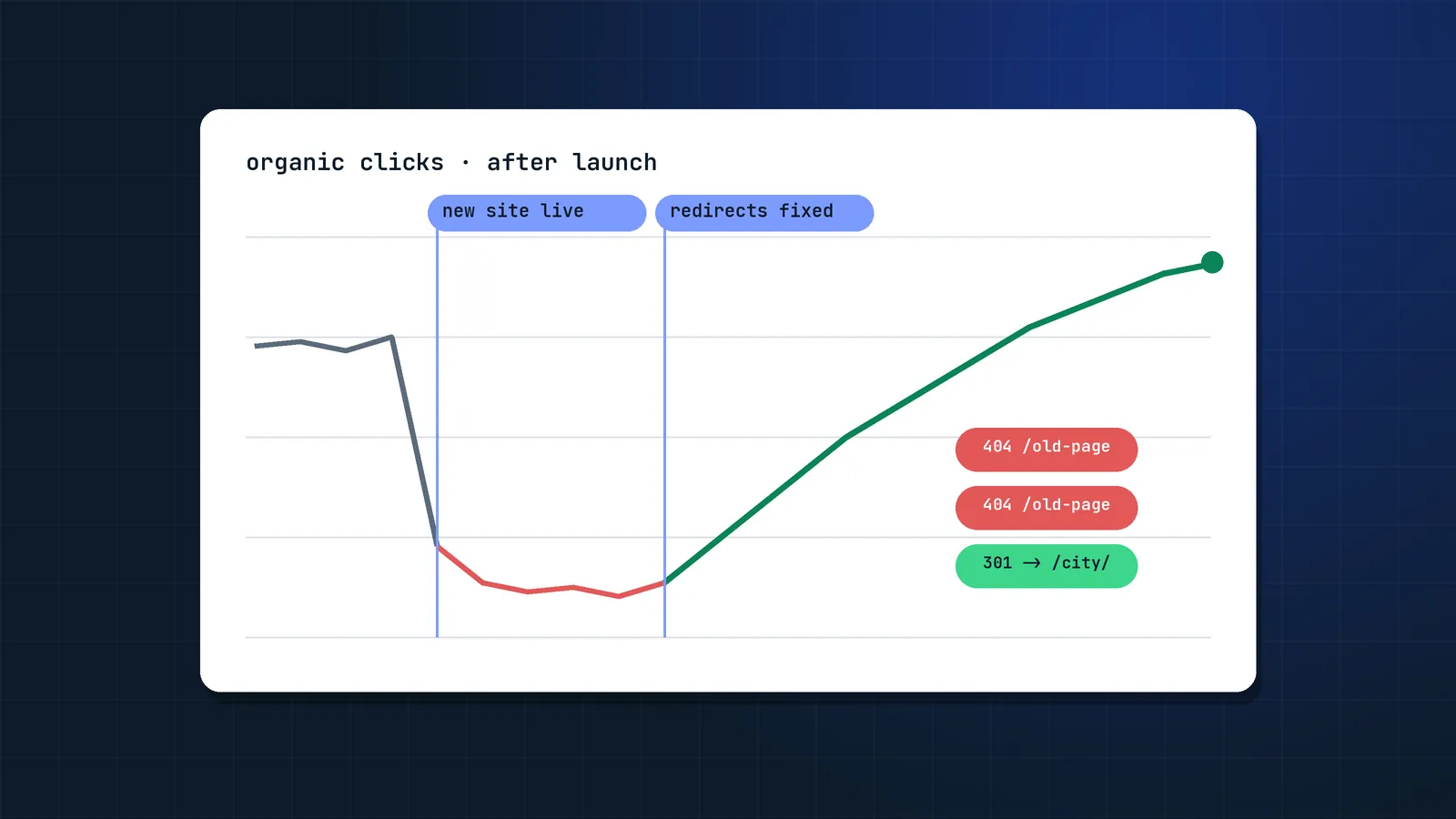
Migrations are priced separately in most cases because the redirect map alone can take days. If you are planning one, my guide to SEO migration cost breaks down the budget, the site migration checklist shows what the work involves, and I also offer SEO migration services.
What should a technical SEO audit include in 2026?
A technical SEO audit is a review of how well search engines can crawl, render, index and understand a website, ending in a prioritised list of fixes. Whatever you pay, a professional technical audit should cover these areas:
- Crawlability: robots.txt, crawl traps, internal link depth, orphan pages, crawl budget on large sites.
- Indexation: Search Console Page indexing report, noindex and canonical conflicts, duplicate and thin pages, soft 404s.
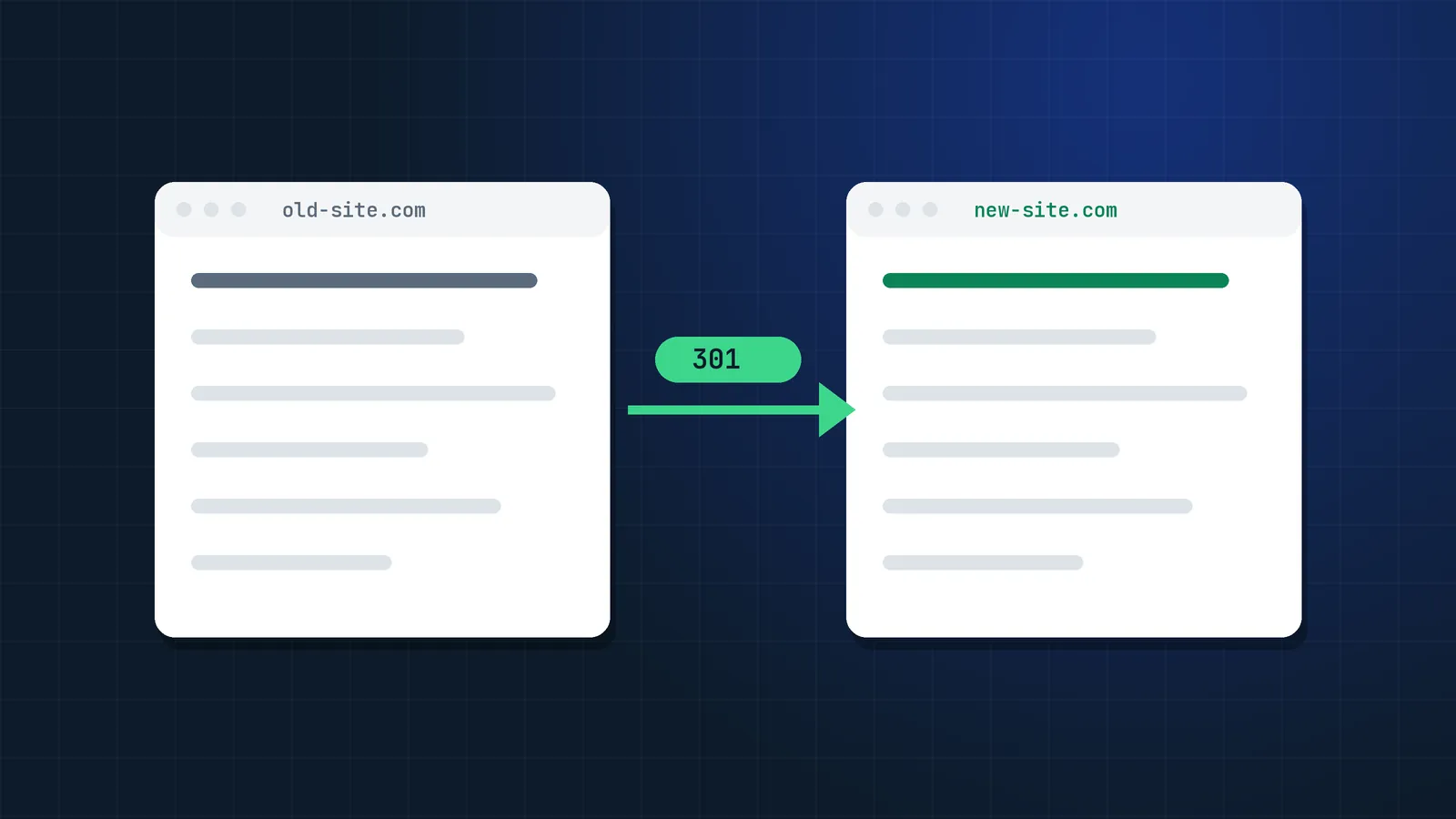
- Redirects and status codes: chains, loops, broken internal links, 404s with traffic or backlinks.
- Site architecture and internal linking: how authority flows to the pages that earn money.
- XML sitemaps: only indexable, canonical, 200-status URLs.
- Rendering: whether main content, links and structured data appear in the rendered HTML (Google's JavaScript SEO basics explain why this matters).
- Core Web Vitals and page speed on key templates, with field data, not just a lab score.
- Structured data: validity and match with visible content (Product, Article, FAQ, Organization, Breadcrumb).
- International SEO, if relevant: hreflang, language and region targeting.
- AI search readiness: whether AI search crawlers (including
Bingbot, which feeds Copilot according to the Bing Webmaster Guidelines) can reach the site and whether key pages are easy to quote. See llms.txt and AI crawlers for the crawler side.
Most importantly, the audit should end in a prioritized action plan: every issue with its impact, the affected URLs, the fix and how to verify it. A list of 300 "errors" without priorities is a crawler export, not an audit.
From my work: for a US online retailer in a regulated niche that had lost rankings, the technical audit and speed fixes were the first phase of a recovery that took organic traffic from about 41,600 to 164,900 monthly visits (+297%) in 11 months, with leads up 621%. The audit did not fix anything by itself. It told the team which fixes to ship first.
Is a cheap SEO audit worth it?
Sometimes. An automated report from a tool such as Screaming Frog, Sitebulb, Semrush or Ahrefs is a useful starting point for a small site with a developer who knows SEO. It can catch broken links, missing titles and redirect chains.
What it cannot do is tell you which problems actually cost you traffic, which fixes to do first, or why a template behaves the way it does. Tools flag symptoms. The value of a paid audit is the judgement: knowing that 4,000 "duplicate title" warnings matter less than one canonical tag pointing every product page to page one of its category.
A useful rule: if the "audit" arrives within an hour of payment, it is a tool report.
What are the red flags when buying an SEO audit?
- No access requested. A real audit needs Search Console and analytics data, ideally CMS or staging access too. An audit from outside only sees half the picture.
- Fixed price without asking about your site. A $499 package for every site cannot account for a 200,000-URL store with faceted navigation.
- A score instead of priorities. "Your SEO health is 64/100" tells your developers nothing.
- Guaranteed rankings. Nobody can promise positions. Google says so in its own guide to hiring an SEO.
- No explanation of the "why". Developers implement fixes faster when they understand the problem.
- The audit is free if you sign a retainer. Sometimes fine, but check that the findings are not just a sales document.
How do you get more value from an SEO audit budget?
- Prepare access before kick-off: Search Console, GA4, CMS or staging, and server logs if you have them. Delays in access are the most common reason audits run long.
- Share context: recent migrations, redesigns, traffic drops and the pages that make you money.
- Ask for tickets, not just a report: fixes written as developer tasks get shipped faster.
- Plan developer time for the weeks after delivery. An audit nobody implements is the most expensive kind.
- Measure: agree in advance what success looks like (indexed pages, rankings for key templates, organic revenue) and check it after each release. The Search Console generative AI report helps track AI search visibility alongside classic clicks.
When should you get a technical SEO audit?
- Before a redesign, replatforming or domain change, so problems are fixed before they are copied to the new site.
- After an unexplained traffic drop, before anyone starts changing content.
- When organic growth stalls even though you publish and build links.
- Once a year on large or fast-changing sites, and after major releases.
- Before scaling content or SEO investment, so you are not building on a broken foundation.
For online stores, an audit often goes together with category and product page work; see my e-commerce SEO consulting. If AI search visibility is the main concern, start with an AI SEO review.
FAQ
How much does a technical SEO audit cost?
Most professional technical SEO audits cost between $1,000 and $5,000 in 2026. Small sites can pay $500 to $1,500, while large e-commerce, marketplace or international sites often pay $10,000 to $20,000 or more, depending on size, technical complexity and the level of implementation support.
How long does a technical SEO audit take?
A small site can be audited in three to seven days. Most mid-size sites take one to three weeks, and large or international sites four to eight weeks. Fast access to Search Console, analytics and the CMS shortens the timeline.
What is the difference between a technical SEO audit and a full SEO audit?
A technical audit checks whether search engines can crawl, render and index your site properly: architecture, redirects, canonicals, speed and structured data. A full SEO audit adds content, keyword targeting, competitors and backlinks, so it usually costs more and takes longer.
Is a free SEO audit enough?
A free or automated audit is useful for spotting obvious errors on a small site. It does not prioritize issues by business impact or explain the causes, so for a site that depends on organic traffic, a manual audit by an experienced SEO is worth the cost.
How often should I do a technical SEO audit?
Large or frequently updated sites benefit from a full audit once a year, plus checks after major releases. Smaller, stable sites can audit every 12 to 24 months, and any site should be audited before a migration and after an unexplained traffic drop.
Should I hire a freelancer, a consultant or an agency for an SEO audit?
Choose based on who will actually review your site and whether you need implementation support. Independent consultants are often more cost-effective and give you direct access to a senior specialist. Agencies make sense when you need a larger team, formal project management or ongoing work across many channels.
Does a technical SEO audit include AI search readiness?
A good one in 2026 should. That means checking that AI search crawlers such as OAI-SearchBot, PerplexityBot and Bingbot are not blocked by robots.txt or the CDN, that main content is in the HTML without JavaScript, and that key pages give clear, quotable answers.
Sources
- SEO Pricing: How Much Does SEO Cost? 439 People Polled, Ahrefs
- SEO Agency Pricing Guide 2026, Clutch
- How Much Does an SEO Audit Cost?, WebFX
- Do you need an SEO?, Google Search Central
- SEO Starter Guide, Google Search Central
- Page indexing report, Search Console Help
- Understand JavaScript SEO basics, Google Search Central
- Web Vitals, web.dev (Google)
- Bing Webmaster Guidelines, Microsoft Bing