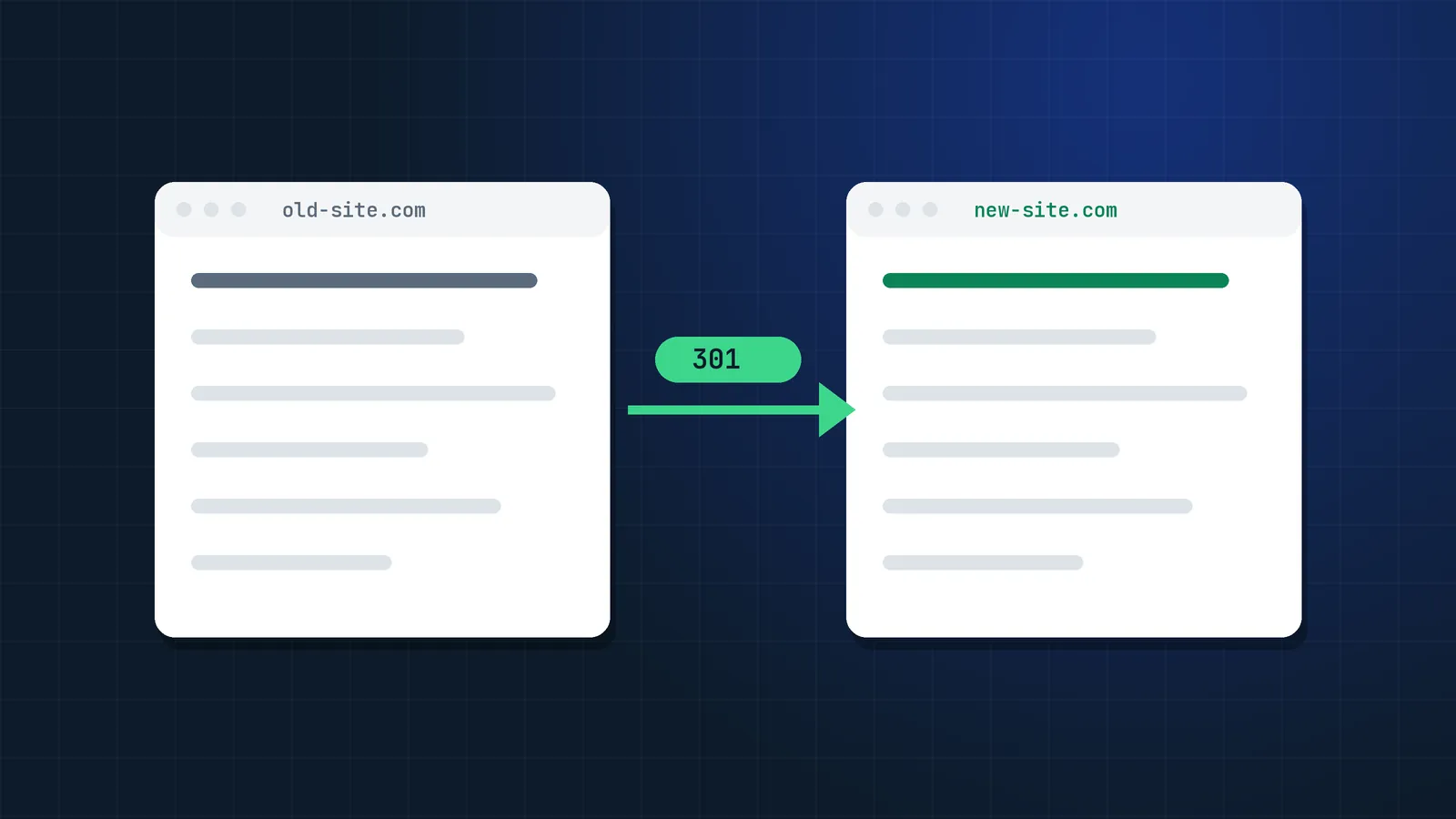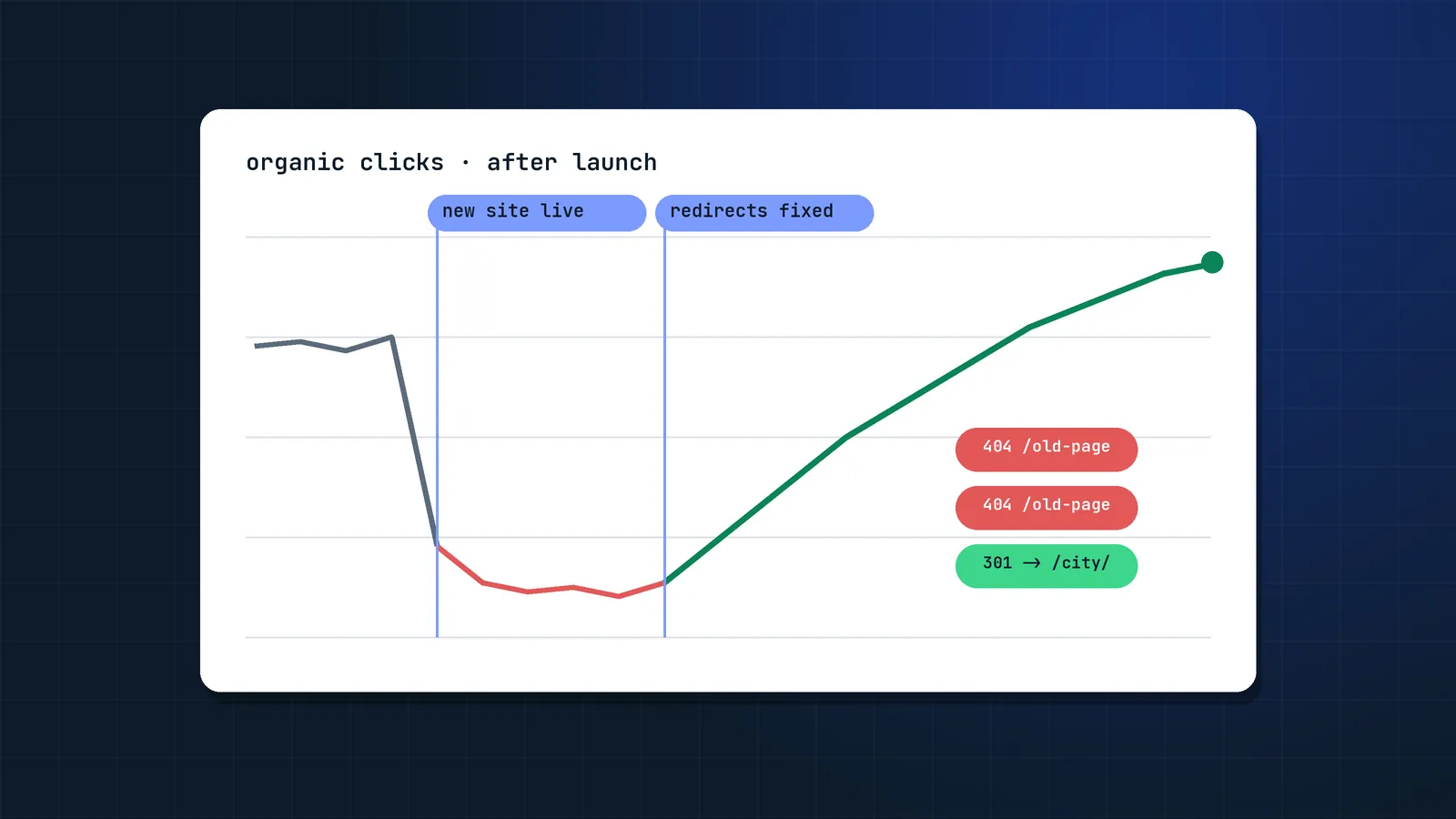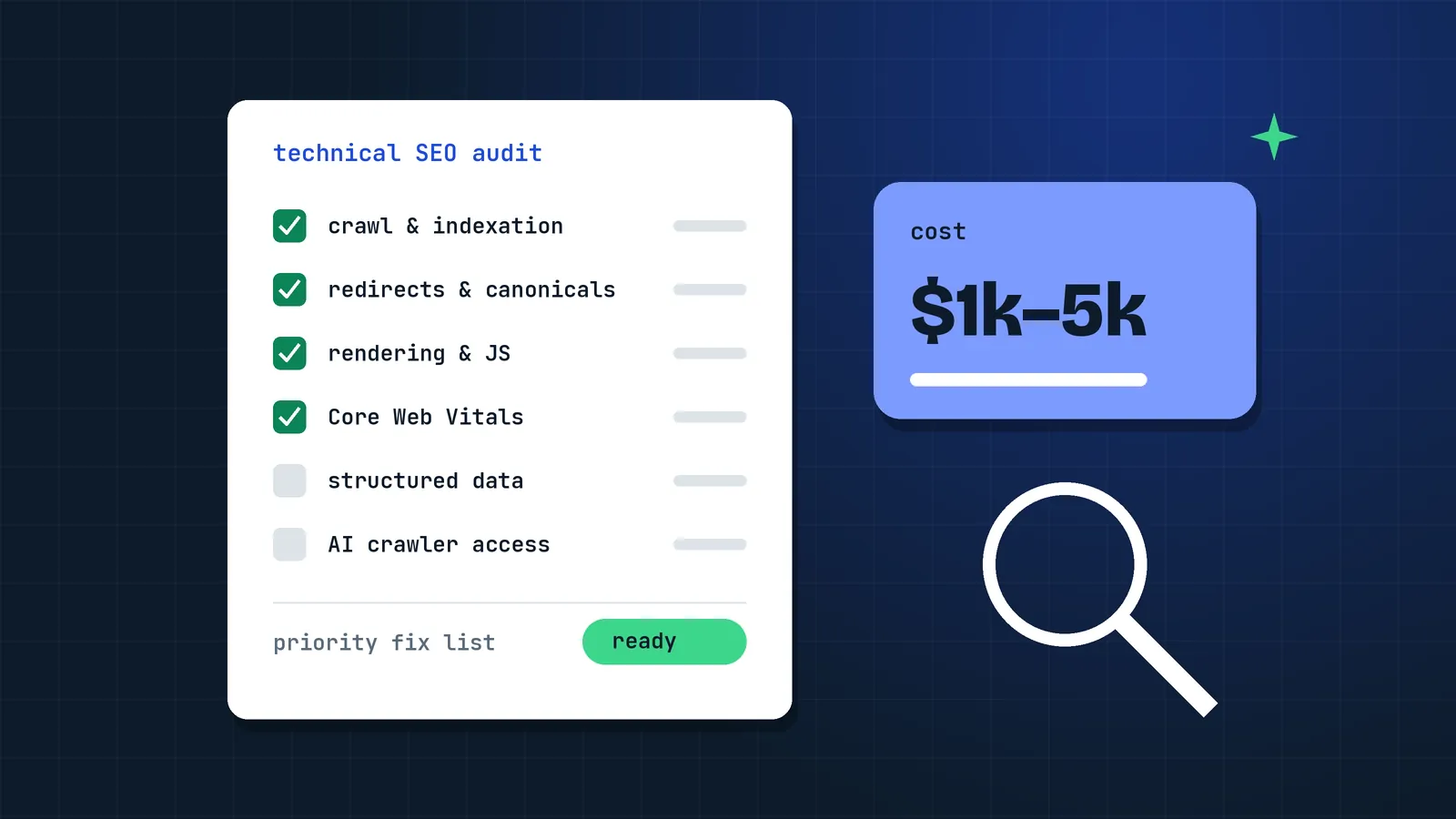
When companies budget for a new website, they usually price the design and the build. The SEO side of the migration is often an afterthought, or a line in the developer's quote that says "301 redirects". That is how a launch ends with a traffic drop and a second, more expensive project to fix it.
This guide explains what SEO support for a migration costs in 2026, what you should get at each price level and how to compare quotes. If you are still planning, my site migration SEO checklist shows the work behind these numbers.
How much does SEO support for a site migration cost?
For most businesses, SEO support for a migration costs between $4,000 and $10,000. Small sites can be covered for less; large stores, marketplaces and international sites regularly pay $15,000 or more.
| Site and migration type | Typical size | SEO migration cost | Typical SEO effort |
|---|---|---|---|
| Small business site, redesign or CMS change | Up to ~500 URLs | $1,500 to $4,000 | 15 to 30 hours |
| Small store, SaaS or content site, replatform | ~500 to 10,000 URLs | $4,000 to $10,000 | 30 to 70 hours |
| Mid-size e-commerce or multilingual site | ~10,000 to 100,000 URLs | $8,000 to $20,000 | 70 to 150 hours |
| Large e-commerce, marketplace or domain + platform move | 100,000+ URLs or several sites | $20,000 to $40,000+ | 150+ hours |
These ranges are my estimates for consultant-led work, based on typical rates and the hours I see on real projects. They match what the market publishes:
- Ahrefs surveyed 439 SEO providers: the average hourly rate is $111, and the most common hourly band is $100 to $150 (Ahrefs).
- Clutch reports that most SEO agencies in its directory charge $100 to $149 per hour (Clutch).
- Some providers publish their minimums: one US agency starts SEO migration services at $1,500 (Demand Path), while a European migration specialist starts at €10,000 (Baba SEO).
The gap between those last two numbers is not a pricing mistake. They describe different scopes, which is why you need to know what each phase involves.
Is SEO migration cost separate from the website build?
Yes, in most projects. Agencies that build sites quote design, development, content import and hosting. Their quotes usually include "set up redirects", which means implementing a list someone else provides.
The SEO work is deciding which old URL should go where, checking that nothing important is lost and catching problems before Google does. Some development agencies have an SEO team that does this properly. Many do not, so ask directly: "Who builds the redirect map, and how do you decide where each URL goes?"
If the answer is a wildcard rule that sends every old URL to the homepage, you are buying the cheapest version of the problem. Google treats irrelevant redirects like soft 404s, and the rankings attached to those pages are lost.
What does each phase of SEO migration support cost?
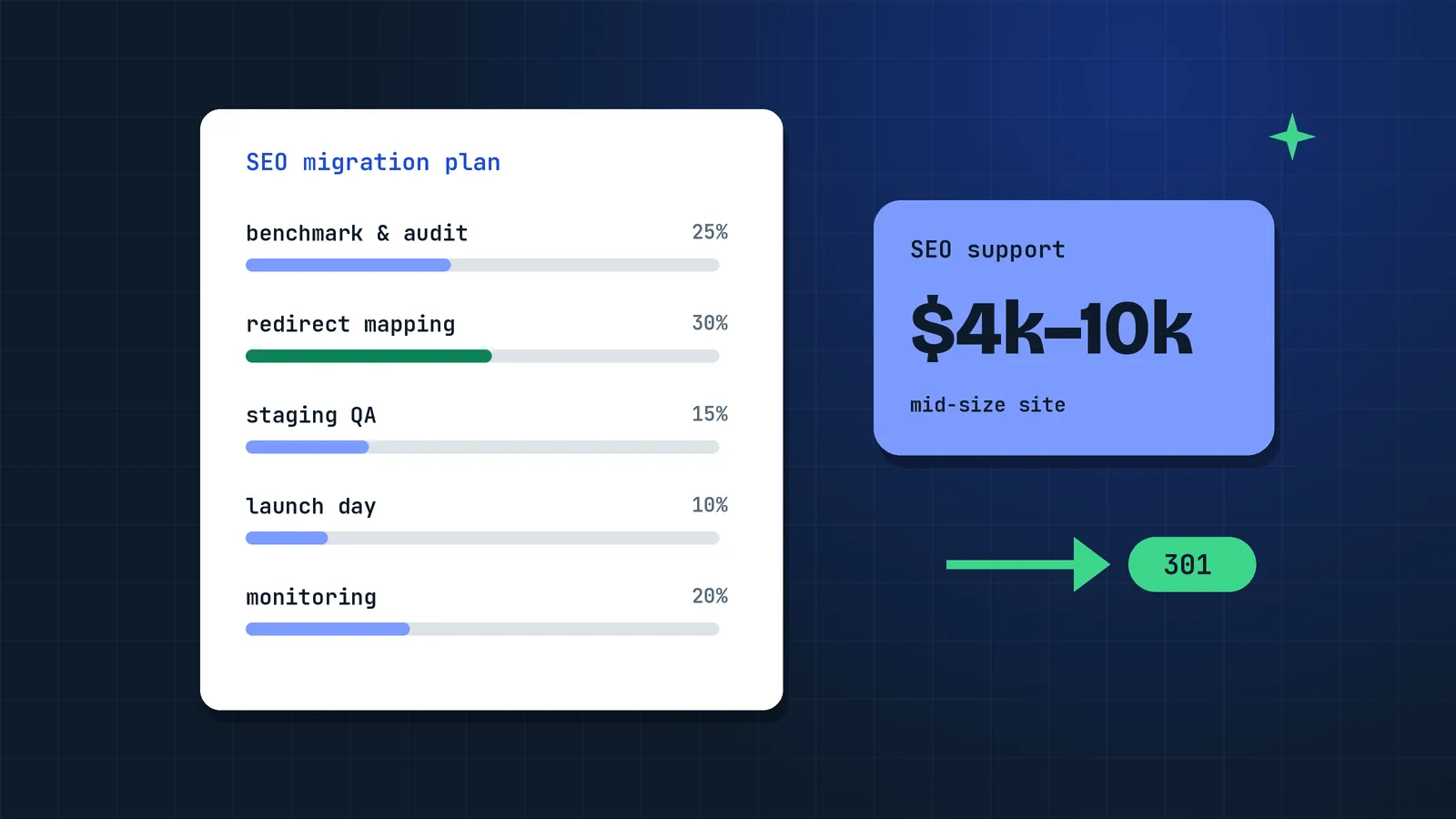
Here is how the budget usually splits on a mid-size project. The percentages are the share of SEO hours, from my own projects.
| Phase | What happens | Share of the budget |
|---|---|---|
| Pre-migration audit and benchmark | Full crawl, Search Console and analytics export, backlink list, record of rankings and traffic by page type | 20 to 30% |
| Redirect mapping | Every URL that earns traffic, links or conversions mapped one to one to its new equivalent | 25 to 35% |
| Staging QA | Crawl of the new site before launch: templates, canonicals, noindex, internal links, structured data, rendering | 10 to 20% |
| Launch day | Redirect testing, robots.txt and noindex checks, sitemap submission, Search Console and Bing Webmaster Tools | 5 to 10% |
| Post-launch monitoring | Weekly checks for 4 to 12 weeks: indexing, crawl errors, traffic by page type, fixes | 15 to 25% |
Redirect mapping and QA are where cheap quotes cut corners. A small team can map a 300-page site by hand in a day. A store with 40,000 product and filter URLs needs scripted matching, manual review of top pages and decisions on discontinued products, and that takes days.
Post-launch monitoring is often sold as a monthly retainer instead, typically $1,000 to $3,000 a month for one to three months.
What drives the price up or down?
Five factors explain almost every difference between quotes:
- Number of URLs that matter. Not the total, but the URLs with traffic, backlinks or conversions. A 50,000-URL site where 2,000 pages earn traffic is cheaper to map than it looks.
- What changes at the same time. A redesign on the same domain is the simplest case. Domain, platform and URL structure changing together multiplies the risk. Google's own guidance is to change one thing at a time, and a domain move adds the Change of Address tool and longer monitoring.
- Languages and countries. Every language or country version needs its own mapping, plus updated hreflang annotations.
- Faceted navigation and parameters. Stores and marketplaces that expose filter URLs need rules for what gets indexed on the new platform.
- How much you want done for you. Advising your developers costs less than writing redirect rules, staging tickets and QA scripts yourself.
A sixth factor is timing. A migration that is scoped after the design is signed off costs more, because SEO findings arrive when changing the URL structure is expensive.
How much does it cost when a migration goes wrong?
This is the number that rarely makes it into the budget. A SALT.agency study of 1,052 domain migrations found that only about 27% were back to their old traffic within 90 days and about 58% within a year.
A recovery project is usually a diagnosis plus the same mapping work that should have been done before launch, under time pressure. In my audit pricing guide, a traffic-drop or recovery audit alone costs $2,500 to $7,500, before any fixes.
From my work: an Australian events marketplace came to us after a rebuild had removed its best-performing location pages and redirected their traffic to pages that did not match. Recovery took four months: rebuilding the lost pages on clean URLs, fixing redirects and the sitemap, and new titles and H1s. Organic traffic went from about 6,600 to 12,000 visits a month and app installs from organic search grew 324%. A proper redirect map before launch would have cost a fraction of that work. The full story is in my guide to failed site migration recovery.
What should an SEO migration quote include?
Before you compare prices, check that each quote covers the same work:
- Benchmark: traffic, rankings and conversions by page type before launch, so you can measure the result.
- URL inventory from a crawl, your CMS, Search Console, analytics and backlinks, not just a crawl.
- One-to-one redirect map with clear rules for removed, merged and discontinued pages.
- Staging review of the new templates before launch, with written tickets for developers.
- Launch-day checklist: redirects, robots.txt, noindex, canonicals, sitemaps and tracking.
- Search engine notifications: sitemaps in Search Console and Bing Webmaster Tools, IndexNow for changed URLs and the Change of Address tool for domain moves.
- Monitoring period of at least four weeks, with a defined response if traffic drops.
Bing matters more than it used to: Microsoft says Copilot search experiences rely on the same crawling and indexing foundation as Bing, so a migration that Bing does not process also affects your visibility in Copilot answers.
What are the red flags in a migration quote?
- No request for Search Console or analytics access. Without them, nobody knows which pages earn traffic.
- "We redirect everything to the homepage." It is fast and it throws away rankings.
- A fixed package price without seeing the site. A 200-URL brochure site and a 40,000-URL store cannot cost the same.
- No staging access before launch. If the first SEO check happens on the live site, problems are already in Google.
- No monitoring after launch. Most issues show up in the first two to six weeks.
- Guaranteed "no traffic loss". Google itself says to expect temporary ranking fluctuation during a move. A good plan keeps the dip small and short; nobody can promise zero.
Freelancer, agency or migration consultant: who should you hire?
| Option | Typical price | Best for | Watch out for |
|---|---|---|---|
| Developer handles redirects | Included in the build | Very small sites with few ranking pages | Nobody owns the SEO decisions |
| Freelance SEO | $1,500 to $8,000 | Small and mid-size sites | Check migration experience, not general SEO |
| SEO agency | $5,000 to $40,000+ | Large teams that want project management | Junior staff doing the mapping |
| Specialist migration consultant | $3,000 to $25,000+ | Replatforms, domain moves, stores and marketplaces | Limited capacity; book early |
Whoever you hire, Google's advice on hiring an SEO applies: ask for examples of past work, ask how they will measure success and never accept guarantees of rankings.
How can you lower the cost without raising the risk?
- Bring SEO in before design sign-off. Keeping URLs that already rank is the cheapest redirect of all.
- Keep the URL structure where you can. Same paths on a new platform need far less mapping.
- Split the project. Move the domain first and redesign later, or migrate one section as a test, as Google suggests for large sites.
- Give access early: Search Console, analytics, the CMS export and staging. Waiting for access is billable time.
- Let your developers implement. Paying the SEO to advise and check, rather than to write every rule, keeps the budget focused on decisions.
If you are not sure what your migration needs, a short call usually settles it. This is the work I do in my SEO migration services: a written scope and a fixed quote before anything starts.
FAQ
How much does SEO for a website migration cost?
SEO support for a migration usually costs $1,500 to $4,000 for small sites, $4,000 to $10,000 for most mid-size sites and $10,000 to $40,000 or more for large e-commerce, international or multi-site projects. The price follows the number of URLs that earn traffic and how much changes at once.
Is redirect mapping included in a web developer's quote?
Usually only the implementation is included. Developers set up the redirects from a list, but deciding where each old URL should go, based on traffic, links and intent, is SEO work. Ask who creates the map before you sign.
How long does SEO migration support take?
Planning and redirect mapping take one to three weeks for small and mid-size sites and four to eight weeks for large ones. Add launch day and at least four weeks of monitoring after go-live.
Is a domain change more expensive than a redesign?
Yes. A domain change affects every URL, needs the Change of Address tool in Search Console and usually takes longer to recover. In a study of 1,052 domain migrations, only about 27% recovered within 90 days.
Can I do an SEO migration myself?
For a small site with few ranking pages, yes, if you follow a checklist, map every page that gets traffic and monitor Search Console after launch. For stores, multilingual sites or domain changes, the cost of a mistake is usually higher than the cost of help.
What is included in post-migration SEO monitoring?
Weekly checks of indexing, crawl errors, redirects and traffic by page type in Search Console and analytics, compared with the pre-launch benchmark, plus fixes when something breaks. It typically runs four to twelve weeks.
Does a site migration affect AI search visibility?
Yes. Google AI Overviews and AI Mode use Google's index, and Microsoft Copilot uses Bing's. If pages lose rankings or drop out of the index during a migration, they also stop being cited in AI answers until the new URLs are processed.
Should I budget for SEO even if the URLs stay the same?
Yes, but less. A redesign that keeps URLs can still remove content, internal links, titles and structured data. A staging review and post-launch check are usually enough, often for under $2,000 on a small or mid-size site.
Sources
- Site moves with URL changes, Google Search Central
- Change of Address tool, Search Console Help
- Redirects and Google Search, Google Search Central
- Tell Google about localized versions of your page (hreflang), Google Search Central
- Do you need an SEO?, Google Search Central
- SEO Pricing: How Much Does SEO Cost? 439 People Polled, Ahrefs
- SEO Agency Pricing Guide, Clutch
- Only 27% of domain migrations recover in 90 days (1,052 migrations), SALT.agency
- SEO Website Migration Services, Demand Path
- Website Migration Cost, Baba SEO
- Bing Webmaster Guidelines, Microsoft Bing
- IndexNow, Microsoft Bing