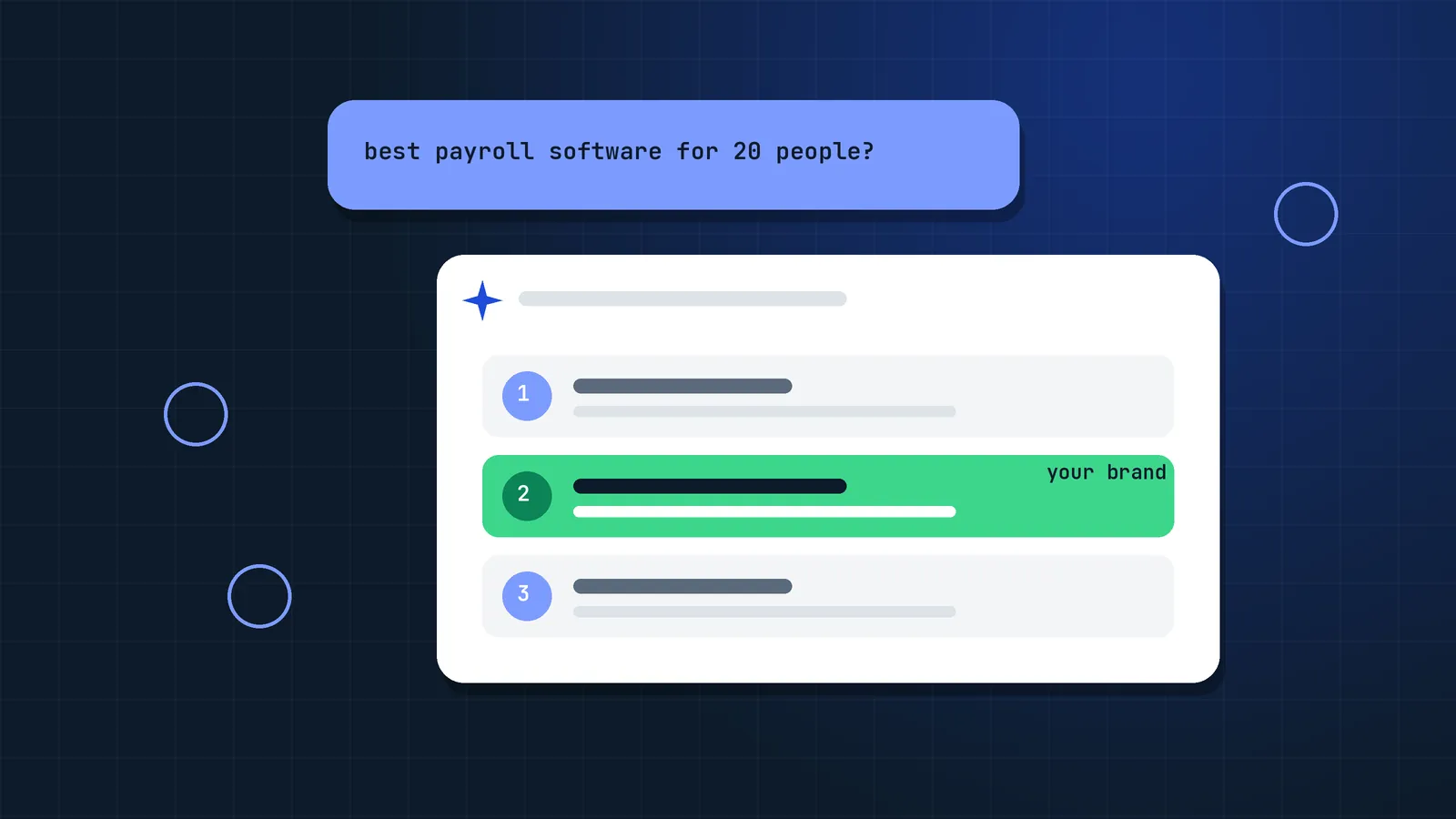
When a buyer asks ChatGPT "what is the best payroll software for a 20-person company?", they get a short list of names, not ten blue links. If your brand is not on that list, you are not in the consideration set. That is what LLM visibility is about: how often, and how favourably, AI assistants mention and cite your brand when people ask questions in your category.
For a US teen apparel brand, we grew traffic from AI assistants by more than 1,900% with topic clusters and LLM-ready category pages (question-led H2s, FAQs and comparison tables), and the brand is now cited in Google AI Overviews and Gemini. Here is the framework behind that.
What is the difference between a brand mention and a citation?
A brand mention is when an assistant names your brand in its answer; a citation is when it links to your page as a source. They are different wins with different levers:
| Brand mention | Source citation | |
|---|---|---|
| What it is | The assistant names your brand in its answer | The assistant links to your page as a source |
| Typical query | "Best CRM for startups" | "How do I calculate churn rate?" |
| Business value | Consideration and demand | Traffic, authority, assisted conversions |
| Main levers | Reputation, reviews, third-party lists, PR | Clear, factual, well-structured content |
2026 research shows these two outcomes are frequently decoupled. Semrush reported that 61.7% of AI citations never name the brand they link to. A page can be used as a source without the brand being recommended, and a brand can be recommended because of what others say about it, without its own site being cited. You need both strategies.
How do ChatGPT, Perplexity, Gemini and Copilot find information?
Each assistant combines what its model learned in training with live retrieval from a search index, but each one uses a different index and crawler:
- ChatGPT answers from its training data and, when search is triggered, from live web retrieval. OpenAI says sites that opt out of
OAI-SearchBotwill not be shown in ChatGPT search answers. Its sources have shifted over time; one 2026 analysis found very little overlap between ChatGPT's cited sources and Bing's top 20 results, and a Peec AI study observed it drawing from at least eight sources, including review platforms like Yelp and TripAdvisor. - Perplexity searches the web on almost every query and shows its sources prominently, so it tends to cite more domains per answer. Its crawler
PerplexityBotrespects robots.txt, so a disallow rule removes you from its index. - Microsoft Copilot is grounded in the Bing index. The Bing Webmaster Guidelines say Bing and Copilot rely on the same crawling, indexing and ranking foundation as traditional search.
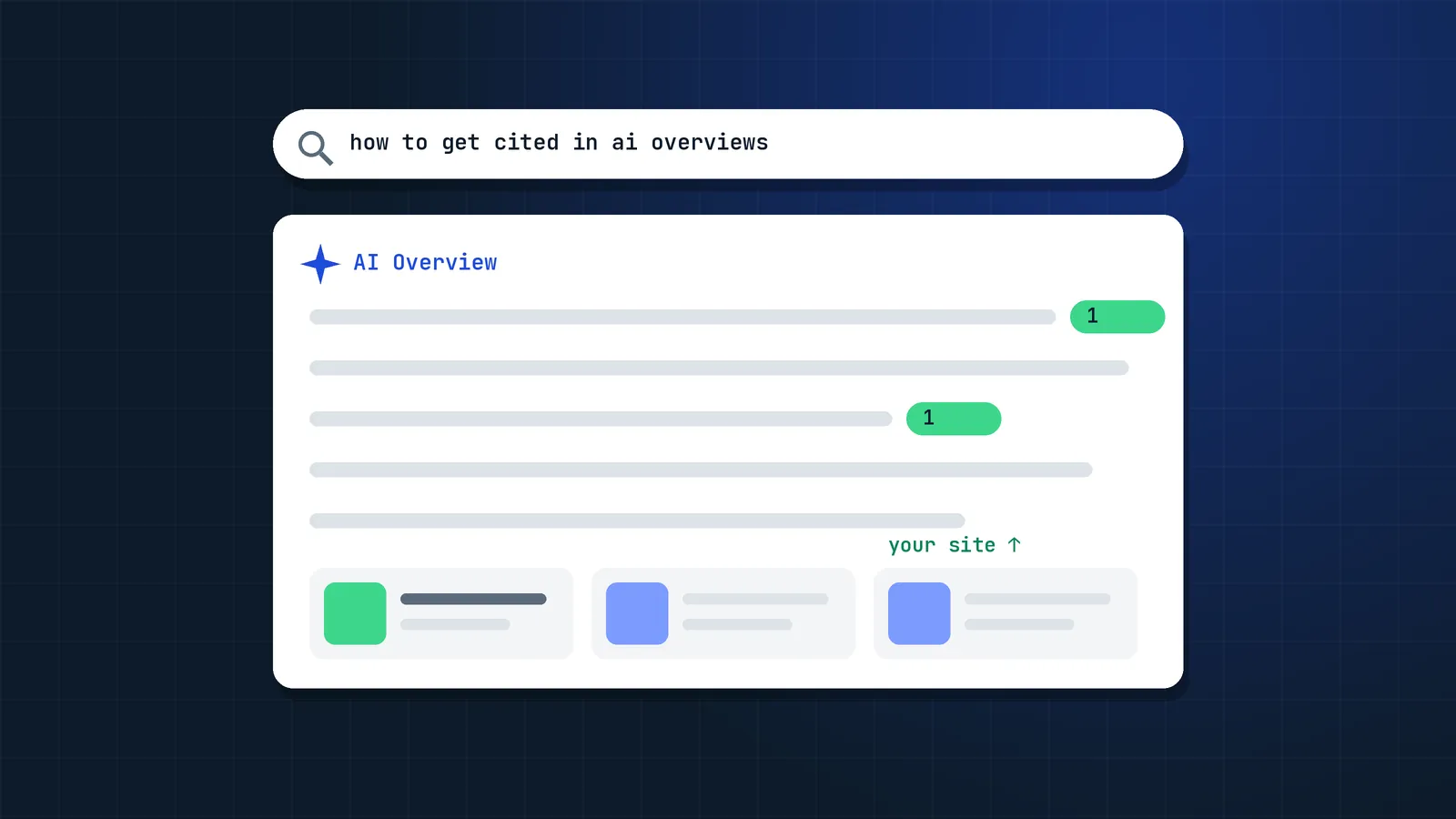
- Google AI Overviews and AI Mode are grounded in Google's own index, with query fan-out deciding which pages are retrieved. See how to get cited in AI Overviews and AI Mode.
- Gemini combines Google Search grounding with its own model knowledge.
The practical lesson: there is no single "AI algorithm". Strong fundamentals (crawlable content, a clear brand entity, broad mentions) travel across all of them.
Why does topic authority matter more than keywords for AI visibility?
Because assistants look for sources that cover a whole topic, not a single keyword. A Semrush study tracked brand visibility in ChatGPT across 1,094 US categories from January to June 2026 and framed visibility as a topic-level game: brands that keep showing up across the many questions in a topic are the ones assistants lean on.
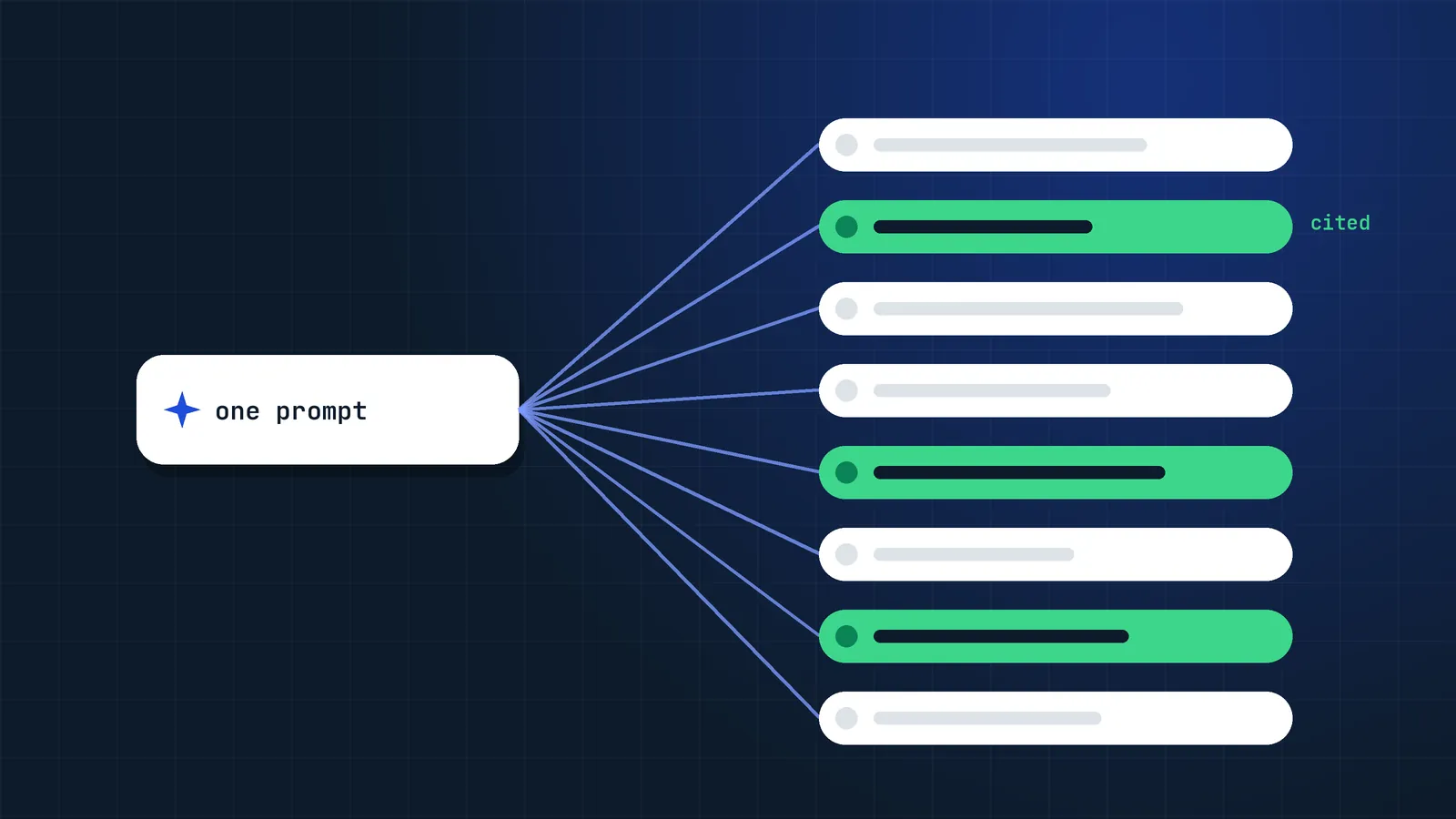
That matches how retrieval works. Assistants expand a prompt into multiple sub-queries (query fan-out) and look for sources that cover the whole cluster. A brand that has one great landing page but no coverage of pricing, comparisons, use cases, integrations and problems is easy to skip.
How do you improve LLM visibility? 7 levers
1. Define the prompts that matter
Write 30 to 100 prompts real buyers would ask, grouped by stage:
- Category: "best [category] for [audience]"
- Comparison: "[you] vs [competitor]", "alternatives to [competitor]"
- Problem: "how to fix [problem your product solves]"
- Proof: "is [your brand] legit", "[your brand] reviews"
These become your tracking set.
2. Make your brand entity unambiguous
Assistants need to know who you are. Use consistent naming everywhere, a detailed About page, Organization or Person structured data with sameAs links to your official profiles, and consistent descriptions on LinkedIn, Crunchbase, G2, Wikipedia (if you qualify) and industry directories.
3. Earn mentions where assistants look
Ahrefs research across 75,000 brands found that branded web mentions correlated with AI Overview visibility much more strongly (0.664) than backlinks (0.218). Its 2026 follow-up across ChatGPT, AI Mode and AI Overviews found YouTube mentions correlated most strongly of all (about 0.74), with branded web mentions close behind (0.66 to 0.71). The three assistants also largely mention the same brands. Practically, that means:
- Getting included in credible "best X" lists and comparison articles.
- Collecting reviews on the platforms that dominate your category (G2, Capterra, Trustpilot, Google Business Profile, app stores).
- Being quoted as an expert in industry media.
- Being mentioned in YouTube videos (reviews, tutorials, interviews), since titles, descriptions and transcripts all count as mentions.
- Taking part in genuine community discussions (Reddit, niche forums) without spamming.
4. Publish content that is easy to quote
Assistants cite pages that state facts plainly. For each important question, give a direct answer first, then context. Use specific numbers, dates, definitions and tables. Original data (surveys, benchmarks, pricing studies) is the strongest magnet for citations because nobody else has it.
5. Cover the full topic cluster
Map every sub-topic a buyer researches and make sure you have a strong page for each: use cases, pricing, comparisons, integrations, implementation, troubleshooting. Link them together so crawlers and readers can move through the cluster.
6. Let AI crawlers in (deliberately)
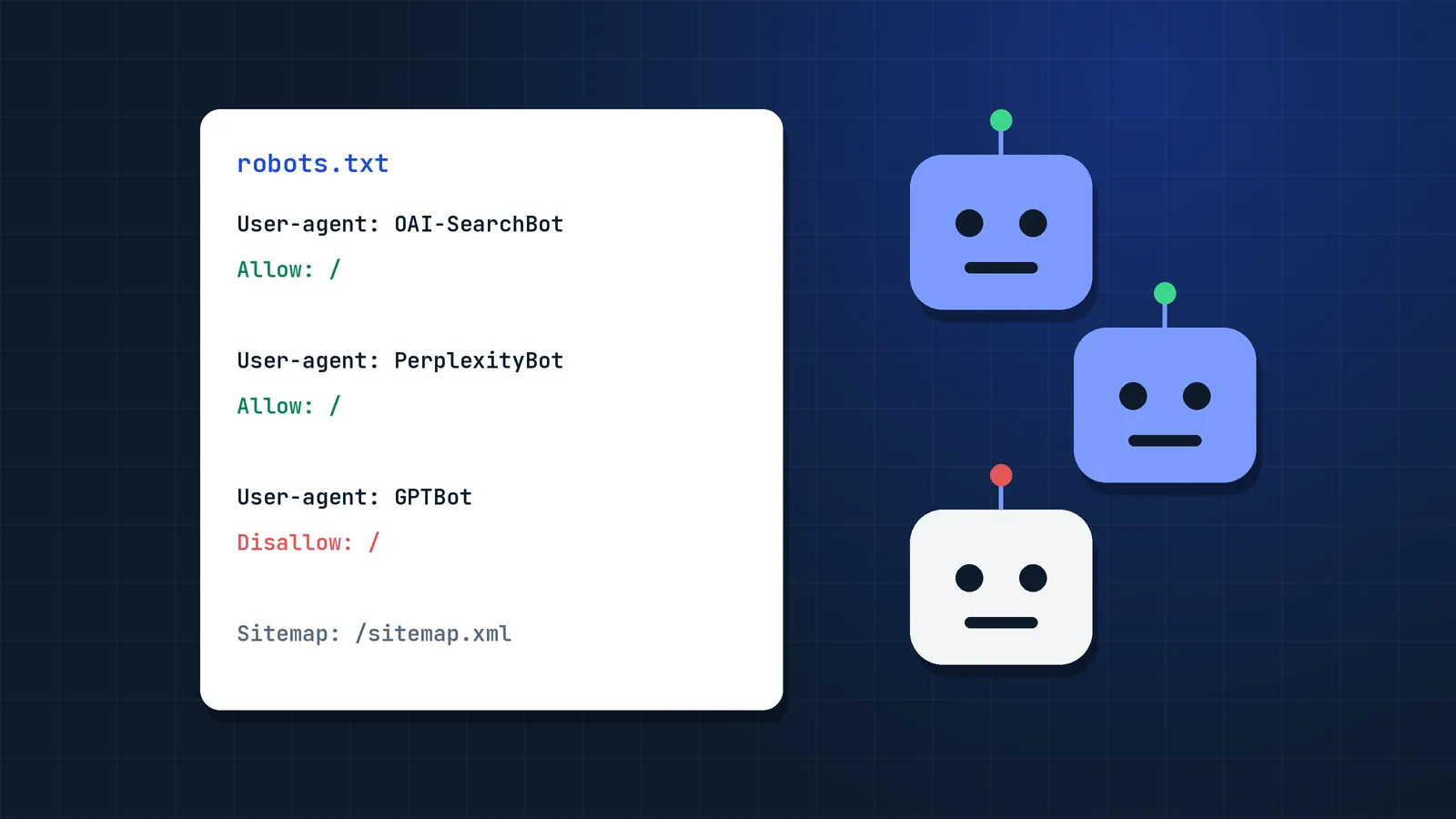
Check your robots.txt and CDN or firewall rules. Many sites block AI crawlers by accident through bot protection. Decide per bot: search-oriented crawlers like OAI-SearchBot and PerplexityBot are what make you appear in answers, while training crawlers like GPTBot are a separate choice. Details in llms.txt and AI crawlers: what actually matters.
7. Fix what assistants get wrong
Ask assistants about your brand regularly. If they repeat outdated pricing, wrong features or old controversies, the fix is upstream: update your own pages, correct third-party listings and publish clear, dated clarifications.
How do you track LLM visibility?
- Fixed prompt set, run monthly, across ChatGPT, Perplexity, Gemini and Google AI Mode, in the markets you sell in.
- Record four things per prompt: are you mentioned, in what position, with what sentiment, and is your site cited?
- Compute share of voice against your top three competitors across the whole set, not per prompt.
- Check Copilot citations in the AI Performance report in Bing Webmaster Tools, in public preview since February 2026. It shows which of your URLs are cited in Copilot and Bing's AI summaries. It is the only first-party citation report outside Google so far.
- Watch referral traffic in GA4 from
chatgpt.com,perplexity.ai,gemini.google.comandcopilot.microsoft.com. Create a custom channel group so it does not disappear into "Referral". - Use tools carefully. Dedicated AI visibility trackers save time, but most published statistics come from vendors, and one 2026 study found that a single AI answer carries almost no reliable signal. Volume and consistency are what make the data useful.
A realistic expectation: LLM visibility moves slower than rankings. Expect to see changes over two to four months, after content updates are recrawled and new mentions are picked up.
What are the most common LLM visibility mistakes?
Most mistakes come from treating AI visibility as a trick instead of SEO and reputation work. These are the four I see most often:
- Treating AI visibility as a separate project from SEO. The same crawlability, content quality and authority work feeds both.
- Chasing one-off screenshots of being mentioned instead of tracking share of voice.
- Publishing "AI-optimised" pages that repeat the question five times. Assistants reward clarity and evidence, not repetition.
- Ignoring review sites and communities, which assistants rely on heavily for recommendations.
FAQ
What is LLM visibility?
LLM visibility is how often and how favourably large language model assistants such as ChatGPT, Perplexity, Gemini and Google AI Mode mention your brand or cite your pages when users ask questions in your category. It covers brand mentions, source citations, position in the answer and sentiment.
Is LLM visibility the same as GEO?
They are closely related. Generative engine optimization (GEO) is the practice of improving content and brand signals for AI-generated answers, and LLM visibility is the outcome you measure. Many people use the terms interchangeably.
Do backlinks still matter for AI search?
Yes, because they help pages rank and get crawled, which feeds retrieval. But recent research suggests brand mentions across the web correlate more strongly with AI visibility than backlinks alone, so link building should be combined with PR and reputation work.
How can I see traffic from ChatGPT in Google Analytics?
In GA4, look at referral sessions from chatgpt.com and other assistant domains, then create a custom channel group named "AI assistants" with a regex that matches those sources. Note that some AI-driven visits arrive without a referrer and appear as direct traffic.
How long does it take to improve LLM visibility?
Usually two to four months for measurable change. Content updates need to be recrawled, and third-party mentions and reviews take time to build up and be picked up by AI systems.
Do YouTube videos help AI visibility?
Very likely. In Ahrefs' 2026 study of 75,000 brands, YouTube mentions had the strongest correlation with brand visibility in ChatGPT, AI Mode and AI Overviews, ahead of web mentions and far ahead of backlinks. Correlation is not proof of cause, but being discussed in videos is one of the clearest signals so far.
Can I see where Copilot cites my site?
Yes. Bing Webmaster Tools added an AI Performance report in February 2026 that shows how often your pages are cited in Microsoft Copilot and Bing's AI summaries, which URLs are cited and the grounding queries behind them.
Which AI assistant should I optimise for first?
Start with the shared foundation: crawlable pages, a clear brand entity and mentions on sites your buyers trust. These work in every assistant. Then prioritise the assistant that already sends you the most visits, which you can see in GA4 referral data.
Sources
- AI visibility is a topic-level game: a study of 50,000 brands in ChatGPT, Semrush
- How ChatGPT, Google AI Overviews and Perplexity source information, Leapd
- Brand visibility in LLMs: how to audit and improve it, Wellows
- LLM brand mention statistics, Mean CEO
- Top brand visibility factors in ChatGPT, AI Mode and AI Overviews (75k brands), Ahrefs
- An analysis of AI Overview brand visibility factors (75k brands), Ahrefs
- Overview of OpenAI crawlers, OpenAI
- How does Perplexity follow robots.txt?, Perplexity Help Center
- Bing Webmaster Guidelines, Microsoft Bing
- Introducing AI Performance in Bing Webmaster Tools (public preview), Bing Webmaster Blog (Feb 2026)