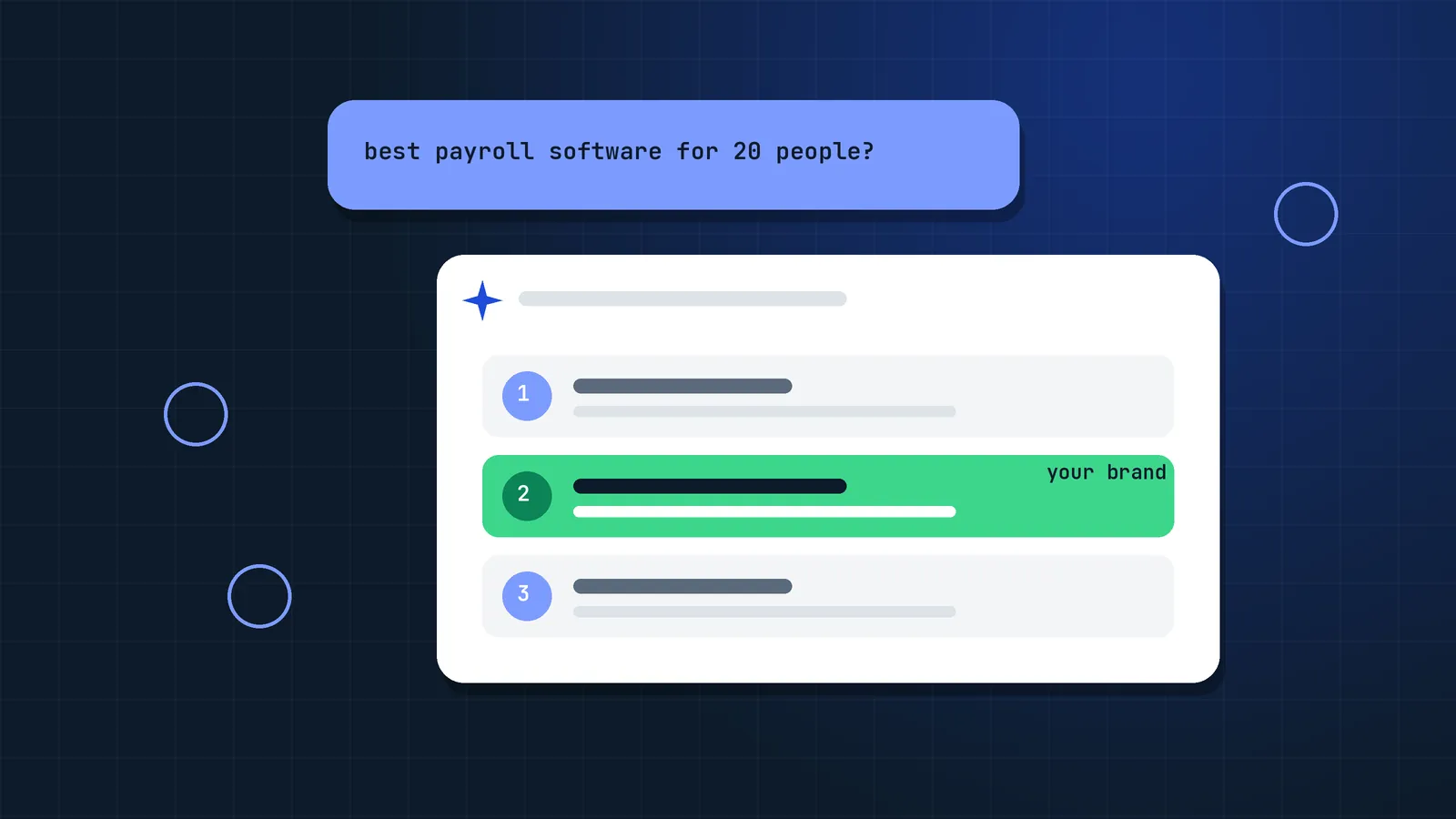
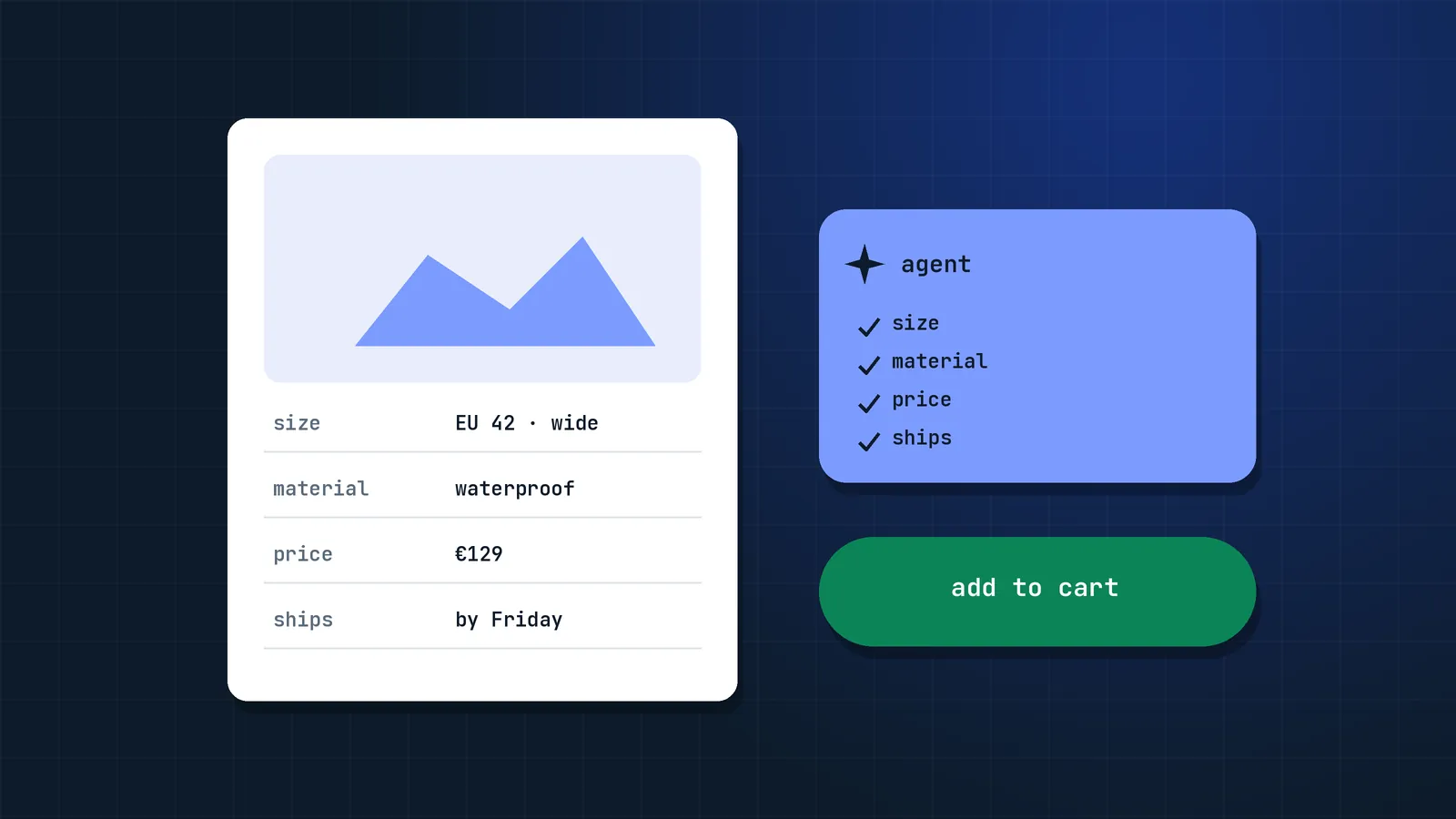
A shopper types "waterproof trail running shoes, wide fit, under €140, delivered by Friday" into ChatGPT or Google AI Mode. The assistant does not browse your homepage or read your brand story. It compares structured facts across retailers, filters out anything that does not match, and presents a short list, sometimes with a checkout button.
That is agentic commerce, and for e-commerce SEO it shifts the focus from "rank the page" to "be the product an agent can confidently recommend".
The traffic is already real. Adobe Analytics measured traffic from AI sources to US retail sites up 393% year over year in the first quarter of 2026, and in March 2026 that traffic converted 42% better than other visits. Growth is slowing as the base gets bigger: AI-referred retail traffic was up 62% year over year in July 2026, and up 1,219% since October 2024 (Digital Commerce 360).
How do AI shopping agents choose products?
Agents work like a strict filter followed by a judgement call:
- Understand the request: category, attributes (size, material, compatibility), budget, delivery deadline, location.
- Retrieve candidates from product feeds, merchant integrations, search indexes and review sources.
- Filter on attributes. If your feed does not state "wide fit" or "waterproof", the agent cannot be sure, so you are excluded.
- Rank the survivors on price, availability, delivery speed, return policy, ratings and merchant trust.
- Present or act: show a shortlist, or complete checkout through a supported protocol.
As one agency put it, products whose data is incomplete, stale or contradictory are not argued out of the answer; they are never in it.
Which protocols power AI agent checkout?
| Protocol | Backed by | Status | What it does |
|---|---|---|---|
| Agentic Commerce Protocol (ACP) | OpenAI and Stripe | Launched September 29, 2025 | Open standard behind Instant Checkout in ChatGPT, letting merchants accept orders from AI agents |
| Universal Commerce Protocol (UCP) | Google, co-developed with Shopify, Etsy, Wayfair, Target and Walmart | Launched January 11, 2026 | Open standard for agentic commerce across discovery, buying and post-purchase, powering checkout in AI Mode and Gemini |
You do not need to integrate a protocol to benefit from agentic search, but you do need clean product data. The merchants that are easy for agents to understand will be the first to benefit when checkout features expand to their market.
What product data do AI shopping agents need?
OpenAI's product feed specification and Google Merchant Center both centre on the same core fields, and Google's AI optimization guide notes that Merchant Center feeds and Business Profiles help products appear in AI responses. In practice, prioritise:
Core fields (non-negotiable)
- Stable product ID and GTIN/MPN where available.
- Accurate title and description.
- Price, sale price and currency.
- Availability, updated frequently.
- Product URL and high-quality images.
- Brand.
Attribute fields (how you win filters)
- Size, colour, material, dimensions, weight.
- Compatibility (for parts and accessories).
- Use case, gender, age group.
- Certifications and specs that buyers filter on.
Trust and logistics fields
- Shipping cost and delivery times by country.
- Return window and cost.
- Ratings and review counts.
- Warranty.
Why must the feed, schema and product page match?
Because agents and search engines cross-check sources, and contradictions reduce trust. If the feed says €129 and in stock while the page says €139 and sold out, the agent cannot be sure which is right, so it picks a competitor.
- Merchant Center feed: complete, attribute-rich, updated at least daily for price and stock.
- On-page structured data:
ProductwithOffer(price, currency, availability),AggregateRatingandReviewwhere genuine, plusshippingDetailsandhasMerchantReturnPolicy. - Visible content: the same price, stock status, shipping and returns information must be on the page in text, not only in schema.
Example of the core markup:
{
  "@context": "https://schema.org",
  "@type": "Product",
  "name": "TrailPro GTX Waterproof Trail Running Shoe (Wide)",
  "sku": "TP-GTX-W-42",
  "gtin13": "0123456789012",
  "brand": {"@type": "Brand", "name": "TrailPro"},
  "material": "Gore-Tex mesh",
  "offers": {
    "@type": "Offer",
    "price": "129.00",
    "priceCurrency": "EUR",
    "availability": "https://schema.org/InStock",
    "shippingDetails": {"@type": "OfferShippingDetails",
      "shippingRate": {"@type": "MonetaryAmount", "value": "0", "currency": "EUR"}},
    "hasMerchantReturnPolicy": {"@type": "MerchantReturnPolicy",
      "returnPolicyCategory": "https://schema.org/MerchantReturnFiniteReturnWindow",
      "merchantReturnDays": 30}
  }
}
What should a product page include for AI agents?
Persuasive copy still converts humans, but agents need facts. Structure product pages with:
- A specification table with every attribute a buyer filters on.
- A short "best for" statement ("Best for wide feet and wet, technical trails").
- Sizing and fit guidance, including comparisons with popular alternatives.
- Shipping and returns summary near the price.
- Real reviews, ideally with attributes (fit, durability).
- An FAQ answering pre-purchase questions from support tickets.
Do category pages still matter for AI shopping?
Yes. Agents often start from categories and comparisons, and Google still ranks category pages for most commercial queries. Strong e-commerce SEO fundamentals remain:
- Logical category and filter architecture, with indexable pages only for filter combinations people search for.
- Helpful category intros and buying guides, not keyword-stuffed text blocks.
- Internal links between related categories, guides and top products.
- Fast, crawlable templates. Product grids that load only via client-side JavaScript are risky.
For a UK wedding flowers store, an audit of site structure and speed, 13 new category pages and internal links from products to guides grew revenue by 140% in six months. Those same foundations are what agents read.
How do you measure AI shopping traffic?
Track AI shopping traffic as its own channel in GA4, then check Merchant Center and server logs to see what agents actually do:
- In GA4, create a custom channel group for AI assistants (chatgpt.com, perplexity.ai, gemini.google.com, copilot.microsoft.com) and compare conversion rates with organic search.
- Check Merchant Center for free listing performance, including AI surfaces as reporting expands.
- Review server logs for agent user agents such as
ChatGPT-UserandOAI-SearchBot, and make sure your firewall is not blocking them. OpenAI says sites that blockOAI-SearchBotwill not be shown in ChatGPT search answers. More in llms.txt and AI crawlers.
What should you do in the first 30 days?
You can cover the basics in a month: fix product data first, then product pages, then start measuring.
- Week 1: audit feed completeness in Merchant Center; list missing attributes per category.
- Week 2: fix contradictions between feed, schema and page (price, stock, shipping, returns).
- Week 3: add specification tables, "best for" statements and FAQs to top 50 products.
- Week 4: set up AI traffic reporting, test your top 20 shopping prompts in ChatGPT and AI Mode, and log where you appear.
FAQ
What is agentic commerce?
Agentic commerce is when AI assistants research, compare and sometimes purchase products on a shopper's behalf. Instead of browsing multiple sites, the user describes what they want and the agent filters products by attributes, price, availability and trust signals.
Do I need to integrate OpenAI's or Google's commerce protocol?
Not to be discovered. Agents can recommend products from feeds and search indexes without a protocol integration. Integration matters when you want the agent to complete checkout directly, and availability depends on your market and platform.
Which product schema properties matter most for AI agents?
Product name, identifiers (SKU, GTIN), brand, and an Offer with price, currency and availability are essential. Shipping details, return policy, ratings and key attributes such as material, size and colour make it much easier for agents to match your product to specific requests.
Will AI shopping agents replace e-commerce SEO?
No. They change what SEO focuses on. Agents rely on the same crawlable pages, structured data, product feeds, reviews and category architecture that good e-commerce SEO already builds. Sites with weak data will feel the shift first.
How do I see if ChatGPT sends traffic to my store?
Look for referral traffic from chatgpt.com in GA4 and group it into an AI assistants channel. Some visits arrive without referrer data, so also watch direct traffic trends and server logs for ChatGPT-User requests.
How much traffic do AI assistants send to online stores?
Still a small share of total traffic, but it grows fast and converts well. Adobe measured AI-referred visits to US retail sites up 393% year over year in Q1 2026, converting 42% better than other traffic in March 2026, and up 62% year over year in July 2026.
Should I block AI agents from my store?
Usually not. Blocking OAI-SearchBot removes your products from ChatGPT search answers, and blocking user-initiated fetchers stops assistants from checking your live price and stock. Block only bots you have a clear reason to exclude, such as training crawlers if you do not want your content used for training.
Sources
- Buy it in ChatGPT: Instant Checkout and the Agentic Commerce Protocol, OpenAI
- New tech and tools for retailers to succeed in an agentic shopping era, Google (Jan 11, 2026)
- Universal Commerce Protocol on Google, Google for Developers
- Google's guide to optimizing for generative AI features on Google Search, Google Search Central
- Agent-ready product feeds: the 2026 playbook, Soku
- AI shopping assistant guide 2026: agentic commerce protocols, Opascope
- Agentic commerce: a complete guide for brands, Braze
- Product structured data, Google Search Central
- AI traffic grows but retail sites lag in AI search visibility, Adobe (Apr 16, 2026)
- Adobe: AI-referral traffic spending, converting more than counterparts, Digital Commerce 360 (Aug 19, 2026)
- Overview of OpenAI crawlers, OpenAI